

Twenty percent of the body's total oxygen intake is used by the brain. Only 10% of the brain is actively working at any given time, yet it still uses almost all of the oxygen being provided to it. To execute complicated activities or many tasks, the oxygen supply is transferred from one brain area to another via blood perfusion regulation (multitasking).
In a 2017 study titled Hyperbaric Oxygen Environment Can Enhance Brain Activity and Multitasking Performance, authors DorVadas, Leonid Kalichman, Amir Hadanny, and Shai Efrati attempted to assess whether a hyperbaric oxygen (HBOT) environment, with increased oxygen supply to the brain, will enhance the performance of complex and multiple tasks.
Functional magnetic resonance tomography (fMRI) technology makes it simple to see these perfusion variations. Numerous studies have shown that in oxygen-deprived conditions, our capacity to carry out complicated tasks declines (Shukitt-Hale et al., 1998; Lieberman et al., 2005; Malle et al., 2013). However, no human studies have been done to examine the potential impact of a single hyperbaric oxygen (HBOT) environmental exposure on brain function.
Any reduction in oxygen availability will have a significant impact on brain function. Complex task performance will be hampered by a fall in plasma oxygen pressure to 65 mmHg, short-term memory will be hampered to 55 mmHg, and consciousness will be lost to 35 mmHg (Zauner, 2002).
At very high altitudes, the effects of a hyperbaric environment (lower oxygen level) on individual motor and cognitive abilities were investigated. While performing relatively easy tasks, cognitive and motor abilities are impaired at high elevations or other oxygen-depleted conditions (Shukitt- Hale et al., 1998; West, 2002, 2003; Mortazavi et al., 2003; Lieberman et al., 2005; Malle et al., 2013). On the other side, it was discovered that increasing oxygen levels, even under normobaric conditions, helped with cognition by reducing the elderly's response time (Choi et al., 2013).
09-08-2026
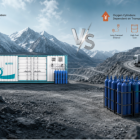
Containerized Oxygen Plants vs. Gas Cylinders: What Is the Real Cost of Oxygen at High-Altitude Mines?A cylinder may look cheap on paper. At a remote, high-altitude mine, the real cost often starts after the cylinder is purchased. Transport, loading and unloading, storage, inventory management, supplier coordination—and the risk of delayed deliveries—all become part of the oxygen bill. For a mine operating for years, these recurring costs can matter far more…
09-02-2026
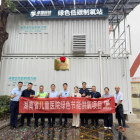
China’s First Green Electricity Low-Carbon Oxygen Station Officially Commissioned at Hunan Children’s HospitalRecently, China’s first green electricity-powered low-carbon oxygen station was officially commissioned at Hunan Children’s Hospital. As a National Regional Medical Center for Children and a Grade III Class A specialized children’s hospital, the hospital has long placed strong emphasis on its social responsibility, particularly by actively responding to national policies on energy conservation, cost reduction,…
08-28-2026
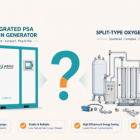
All-in-One vs. Split-Type PSA Oxygen Systems: What Are You Really Paying For?When hospitals compareAll-in-One vs. Split-Type PSA Oxygen Systems: What Are You Really Paying For? When hospitals compare PSA oxygen systems, the discussion usually starts with flow rate, oxygen purity, power consumption and equipment price. But once the project reaches installation, the questions become more practical: Where will the system go? How much space is available?…
Submit Request