

For many years, hospital oxygen systems were viewed as supporting equipment—essential, but often considered only after the main medical infrastructure had already been planned. That mindset is beginning to change.
Across healthcare systems worldwide, oxygen is no longer treated simply as a utility. It is increasingly recognised as part of the hospital's core infrastructure, directly influencing clinical capacity, operational efficiency and long-term resilience. The conversation is shifting from "Which oxygen generator should we buy?" to "How should we build an oxygen supply system that can support the hospital for the next decade?"
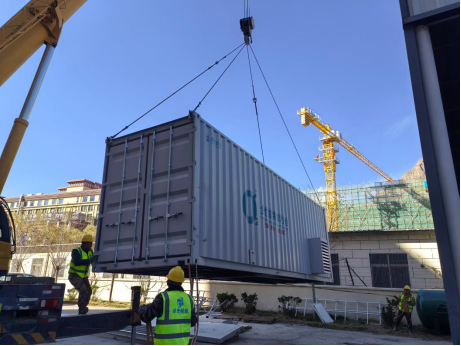
This change is being driven by healthcare itself. Rehabilitation medicine continues to grow, respiratory diseases require more long-term oxygen therapy, high-flow oxygen support has become increasingly common, and hospitals are under constant pressure to deliver better patient care while reducing operating costs. As clinical services evolve, oxygen demand rarely remains static. A system that perfectly meets today's requirements may become insufficient only a few years later.
That is why modern Hospital Oxygen Planning should never begin with equipment specifications alone. Capacity is important, but it is only one part of a much larger equation. The design of a Medical Oxygen Generation System should consider not only bed numbers, but also clinical departments, patient mix, oxygen therapy intensity, peak simultaneous consumption, future expansion plans and local healthcare conditions. Hospitals of similar size can have completely different oxygen requirements because the way oxygen is used is often more important than the number of patients themselves.
Project experience provides practical reference points. Community clinics and township healthcare centres can often operate efficiently with one or two 3 Nm³/h PSA oxygen systems, while a hospital with approximately 100 beds can generally be supported by a 20 Nm³/h PSA Oxygen Plant under normal operating conditions. Rehabilitation hospitals, however, usually require significantly higher oxygen production because oxygen therapy and respiratory support create much greater simultaneous demand. These figures are engineering references rather than universal standards, and every Hospital Oxygen Supply project should ultimately be designed around actual clinical requirements instead of standard formulas.
A rehabilitation hospital in Changsha offers a clear example of how oxygen demand evolves together with clinical development. Several years ago, the hospital, which now operates around 300 beds, installed its first 5 Nm³/h Medical Oxygen Generation System from ZOY Technology. At that stage, the system fully met the hospital's operational needs. As rehabilitation services expanded and patient demand increased, the hospital upgraded to a fully integrated 20 Nm³/h PSA oxygen generation station, significantly improving production capacity without replacing the entire oxygen infrastructure.
Earlier this year, the hospital entered another phase of development. More than ten HDU high-flow respiratory support devices were introduced while rehabilitation and oxygen therapy services continued to expand. Although the number of beds changed very little, simultaneous oxygen consumption increased considerably. Instead of rebuilding the oxygen station once again, the hospital added another 20 Nm³/h PSA oxygen system, installed directly above the existing unit in a stacked configuration. Today, the facility operates two 20 Nm³/h systems with a combined production capacity of 40 Nm³/h.
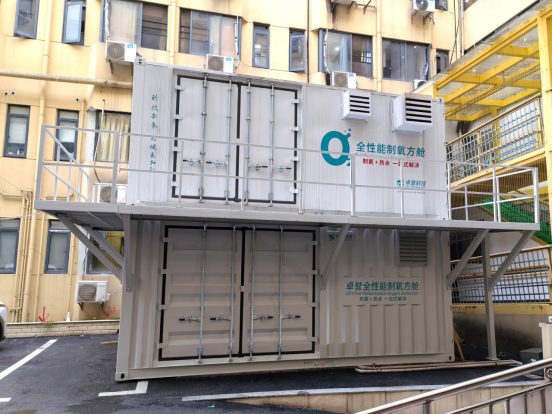
What makes this project valuable is not the final capacity itself, but the planning philosophy behind it. The hospital did not replace equipment because it had become obsolete. It expanded because clinical demand had changed. By designing the oxygen infrastructure with future scalability in mind, previous investments remained valuable while the hospital continued growing without disrupting daily medical services. In many ways, this reflects how hospital oxygen infrastructure should be planned—not as a one-time purchase, but as a system capable of evolving alongside healthcare delivery.
The same planning principle can be seen in very different healthcare environments. In many developing regions, the priority is not expansion but reliable access to medical oxygen. One healthcare facility in Kenya recently deployed a 50 Nm³/h on-site oxygen generation system to strengthen local oxygen availability and reduce dependence on cylinder deliveries. While the clinical environment differs greatly from that of a rehabilitation hospital in China, the objective remains remarkably similar: creating a stable Central Oxygen Supply that healthcare professionals can rely on every day.
Reliable On-site Oxygen Generation is also finding applications beyond hospitals. High-altitude office buildings require oxygen-enriched indoor environments to improve working conditions, while aquaculture facilities depend on stable oxygen production to maintain biological systems. Although these industries serve completely different purposes, they share the same operational expectation: oxygen should be available continuously, efficiently and independently of external supply chains. This wider adoption reflects the growing maturity of PSA oxygen generation technology and demonstrates that reliable oxygen infrastructure has become valuable wherever uninterrupted oxygen is essential.
As hospitals evaluate oxygen systems today, the discussion has shifted beyond production capacity. Increasingly, decision-makers focus on long-term operational value. Factors such as energy efficiency, maintenance, digital monitoring and future scalability now influence procurement decisions as much as oxygen purity itself.
Modern PSA oxygen plants are expected to deliver more than oxygen production. Hospitals increasingly value systems that can:
Ultimately, hospitals are investing not only in oxygen generation, but in infrastructure that remains efficient, reliable and adaptable throughout its lifecycle.
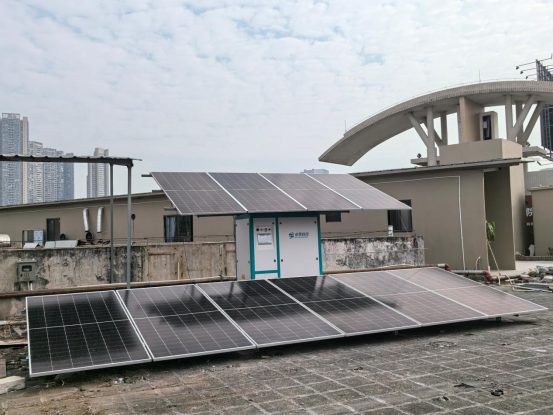
These technologies matter because they improve how hospitals operate rather than simply increasing technical specifications. In modern healthcare, the value of an oxygen system is measured not only by how much oxygen it produces, but also by how efficiently, reliably and sustainably it supports patient care throughout its entire lifecycle.
Looking ahead, hospital oxygen planning will continue to evolve alongside healthcare itself. New respiratory therapies, ageing populations, higher expectations for energy efficiency and growing pressure to reduce operational costs are changing the way hospitals approach infrastructure investment. Oxygen systems are no longer isolated engineering projects; they have become part of broader healthcare planning.
The hospitals that benefit most from their oxygen infrastructure are rarely those with the largest oxygen plants. More often, they are the hospitals that planned ahead—designing systems that can adapt to changing clinical demand instead of simply meeting today's requirements.
Ultimately, choosing a Medical Oxygen Generation System is not only about selecting equipment. It is about building an oxygen infrastructure that remains reliable, scalable and efficient throughout the hospital's future development. As healthcare continues to evolve, that long-term perspective may become the most important decision any hospital makes when planning its oxygen supply.
About ZOY TECH
Founded in 2015 and headquartered in Changsha, China, ZOY TECH specializes in oxygen generation technologies for healthcare and industrial applications. The company integrates research and development, manufacturing, installation and after-sales service to provide complete oxygen supply solutions. Its product portfolio includes PSA medical oxygen generation systems, centralized oxygen supply systems, integrated oxygen generation stations, industrial oxygen systems and hyperbaric oxygen chambers. Today, ZOY solutions serve more than 2,000 healthcare facilities and customers across more than 60 countries. Supported by continuous innovation, multiple core invention patents and extensive project experience, ZOY TECH is committed to helping hospitals and industrial users build safer, smarter, more energy-efficient and more sustainable oxygen infrastructure.
09-08-2026
Containerized Oxygen Plants vs. Gas Cylinders: What Is the Real Cost of Oxygen at High-Altitude Mines?A cylinder may look cheap on paper. At a remote, high-altitude mine, the real cost often starts after the cylinder is purchased. Transport, loading and unloading, storage, inventory management, supplier coordination—and the risk of delayed deliveries—all become part of the oxygen bill. For a mine operating for years, these recurring costs can matter far more…
09-02-2026
China’s First Green Electricity Low-Carbon Oxygen Station Officially Commissioned at Hunan Children’s HospitalRecently, China’s first green electricity-powered low-carbon oxygen station was officially commissioned at Hunan Children’s Hospital. As a National Regional Medical Center for Children and a Grade III Class A specialized children’s hospital, the hospital has long placed strong emphasis on its social responsibility, particularly by actively responding to national policies on energy conservation, cost reduction,…
08-28-2026
All-in-One vs. Split-Type PSA Oxygen Systems: What Are You Really Paying For?When hospitals compareAll-in-One vs. Split-Type PSA Oxygen Systems: What Are You Really Paying For? When hospitals compare PSA oxygen systems, the discussion usually starts with flow rate, oxygen purity, power consumption and equipment price. But once the project reaches installation, the questions become more practical: Where will the system go? How much space is available?…
Submit Request