

When people talk about energy-efficient oxygen generation systems, the conversation often starts with electricity consumption.
How many kilowatts does the system use?
How much can it reduce monthly operating costs?
These are important questions, but they only tell part of the story.
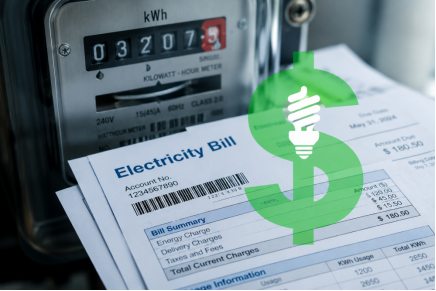
As hospitals, rehabilitation centers and healthcare facilities face rising energy prices and increasing pressure to control long-term operating costs, a broader definition of efficiency is emerging. The most competitive oxygen generation systems today are no longer judged solely by oxygen purity or power consumption. They are evaluated by how effectively they reduce waste, simplify operation and create value throughout the entire lifecycle of the system.
This shift is driving a new industry trend: Resource-Efficient Oxygen Generation.
In practical terms, resource efficiency means reducing unnecessary costs not only during operation, but also during manufacturing, installation, maintenance and future expansion.
Traditional PSA oxygen plants have served hospitals reliably for decades, but many are still designed as fixed, infrastructure-heavy installations.
A conventional oxygen station typically consists of multiple standalone components—including the air compressor, air treatment system, PSA oxygen generator, oxygen buffer tank and control cabinet—connected through on-site piping, valves and electrical wiring. In many projects, a dedicated equipment room must also be prepared before installation can begin.
While this approach is proven, it often creates hidden costs beyond electricity consumption. Site preparation, civil works, piping installation and future expansion all require additional resources, time and coordination.
As healthcare facilities become increasingly cost-sensitive, reducing infrastructure-related waste is becoming just as important as reducing energy consumption.
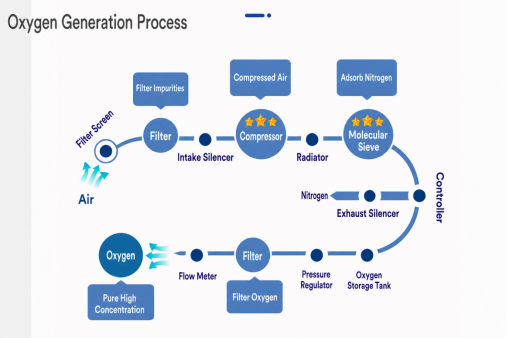
One of the clearest industry trends is the move toward integrated and modular oxygen generation systems.
Rather than assembling equipment piece by piece on-site, modern systems are increasingly delivered as factory-integrated solutions designed for rapid deployment and future scalability.
ZOY Technology's containerized oxygen generation solutions were developed around this principle.
Key advantages include:
• No dedicated oxygen plant building required in many applications
• Reduced site preparation and civil construction costs
• Plug-and-play deployment with minimal on-site assembly
• Faster commissioning and shorter project timelines
• Easier future expansion through modular capacity upgrades
• Smaller installation footprint and more efficient space utilization
• Can be powered by solar energy or other clean electricity sources to help reduce power costs
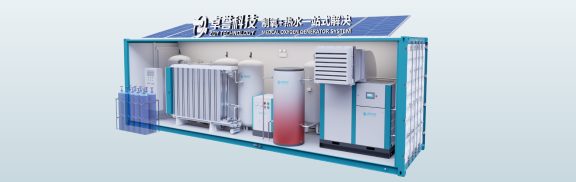
By reducing infrastructure requirements and supporting cleaner power integration, modular oxygen systems help lower both initial investment and long-term operational complexity.
Most buyers evaluate an oxygen generation system based on several factors, including oxygen concentration, oxygen flow rate, air pressure and noise level. Among these, compressed air dew point is one important example of a parameter that can affect long-term reliability.
The molecular sieve at the heart of every PSA oxygen plant is highly sensitive to moisture. Excessive water vapor can accelerate performance degradation, increase maintenance requirements and shorten service life.
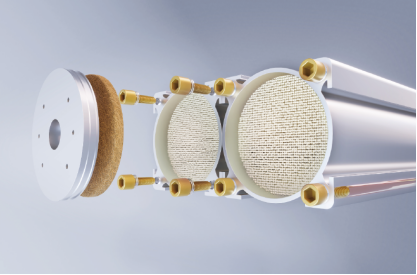
For this reason, medical oxygen systems typically require low pressure dew points to protect the adsorption process.
Many oxygen generators achieve the industry-standard dew point requirements. ZOY Technology takes air treatment a step further by combining refrigerated drying and adsorption drying to create a deeper air treatment process before compressed air enters the PSA system.
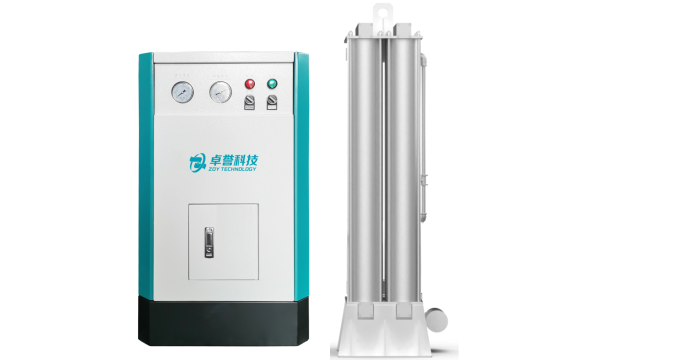
refrigerated dryer+desiccant air dryer
The objective is simple: reduce moisture exposure, improve adsorption stability and extend the operating life of critical components.
Over the lifespan of an oxygen generation system, protecting the molecular sieve often delivers greater value than chasing marginal improvements in oxygen purity.
Oxygen generation produces a significant amount of thermal energy during normal operation.
With a strong energy-saving mindset, ZOY Technology’s designers developed a smart heat recovery solution that captures this thermal energy and converts it into hot water for hospitals, institutions and other facilities, turning what would otherwise be wasted energy into a practical resource-efficient application.
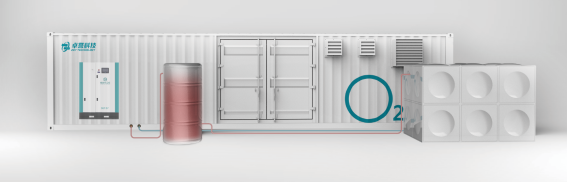
Field testing has demonstrated waste heat recovery rates of up to 70%, producing hot water temperatures above 70°C without additional energy consumption.
For hospitals, rehabilitation centers, nursing facilities and commercial buildings, this creates an additional source of value from an existing operating process while helping reduce overall energy costs.
Efficiency is not only about equipment.
It is also about information.
Many oxygen supply interruptions begin as small performance changes that are difficult to detect during routine inspections. Pressure fluctuations, abnormal flow rates, rising dew points or changing oxygen output can develop gradually before becoming operational problems.
Cloud-based monitoring systems are changing this.
ZOY Technology’s remote monitoring platform provides real-time access to oxygen production data, flow rate, pressure, dew point and cumulative operational performance. Maintenance teams can monitor system conditions remotely and respond to potential issues before they affect oxygen supply.
The result is not simply better monitoring.
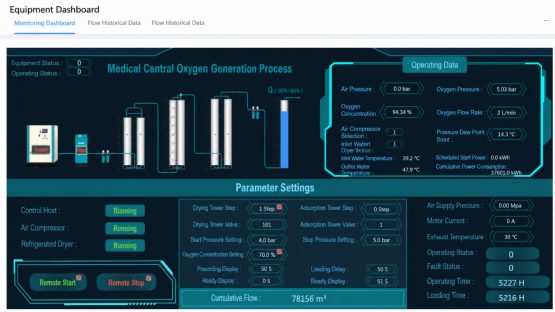
It is better utilization of maintenance resources, reduced downtime and more predictable system performance.In a resource-efficient oxygen generation system, visibility itself becomes a form of efficiency.
Backed by products exported to more than 60 countries and regions across the Americas, Southeast Asia, Europe and Africa, a three-year annual growth rate of over 60%, more than 2,000 hospitals worldwide and a customer satisfaction rate above 98%, ZOY Technology is seeing a clear shift in how healthcare facilities evaluate oxygen solutions. The industry is moving beyond traditional performance metrics.
Future oxygen systems will not be defined solely by oxygen output.They will be defined by how effectively they use resources.
Systems that require less infrastructure. Systems that are easier to expand. Systems that protect critical components for longer service life. Systems that recover wasted energy. Systems that support intelligent monitoring. Systems that can work alongside renewable energy sources such as solar power.
These are no longer optional advantages.They are becoming the foundation of long-term oxygen infrastructure planning.
The future of oxygen generation is not simply about producing oxygen more efficiently.It is about creating more value from every resource used.
That is the principle behind Resource-Efficient Oxygen Generation.
About ZOY TECH
Founded in 2015 and headquartered in Changsha, China, ZOY TECH specializes in oxygen generation technologies for healthcare and industrial applications. The company integrates research and development, manufacturing, installation and after-sales service to provide complete oxygen supply solutions. Its product portfolio includes PSA medical oxygen generation systems, centralized oxygen supply systems, integrated oxygen generation stations, industrial oxygen systems and hyperbaric oxygen chambers. Today, ZOY solutions serve more than 2,000 healthcare facilities and customers across more than 60 countries. Supported by continuous innovation, multiple core invention patents and extensive project experience, ZOY TECH is committed to helping hospitals and industrial users build safer, smarter, more energy-efficient and more sustainable oxygen infrastructure.
09-24-2026
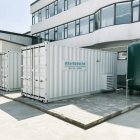
New Oxygen for the “City of the Sage” | Two ZOY Full-Performance Oxygen Shelters Installed at Qufu Second People’s HospitalQufu is known as the hometown of Confucius and the “City of the Sage in the East.” For more than two thousand years, this city has been shaped by Confucian culture and the idea of “benevolence toward others.”That spirit is still very much part of everyday life here. And today, it is also reflected in…
09-02-2026
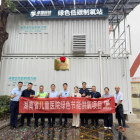
China’s First Green Electricity Low-Carbon Oxygen Station Officially Commissioned at Hunan Children’s HospitalRecently, China’s first green electricity-powered low-carbon oxygen station was officially commissioned at Hunan Children’s Hospital. As a National Regional Medical Center for Children and a Grade III Class A specialized children’s hospital, the hospital has long placed strong emphasis on its social responsibility, particularly by actively responding to national policies on energy conservation, cost reduction,…
07-30-2026
ZOY Welcomes Hunan Xingwang Technology Group to Strengthen Strategic Cooperation for the African Oxygen MarketRecently, ZOY welcomed a delegation led by Mr. Hou Xingwang, Chairman of Hunan Xingwang Technology Group and President of the Hunan Africa Economic and Trade Chamber of Commerce, for a business visit and strategic cooperation discussion. Mr. Huang Gang, Chairman of ZOY, together with the company’s management team, warmly received the delegation. The meeting focused…
Submit Request