

In the past, people often defined health as simply “not being sick.” Today, that idea is changing. Around the world, more people are focusing not only on lifespan, but on how to stay healthier, more active, and maintain a better quality of life as they age.
In longevity medicine, this concept is called"Healthspan"— the length of time people can stay healthy physically and mentally.

According to Harvard Health, healthy aging is not just about adding years to life, but about maintaining energy, cognitive ability, and overall well-being over time. This is one reason why topics such as sleep, recovery, brain health, stress management, and oxygen therapy have gained increasing attention in recent years.
In fact, according to several wellness industry reports, health has become one of the top priorities among high-net-worth individuals globally in 2025, ranking above many traditional lifestyle goals.
Oxygen is something people rarely think about because it is everywhere. Yet it plays a role in nearly every important energy and metabolic process in the human body.
Under modern lifestyles filled with stress, long working hours, poor sleep, and sedentary habits, more people are beginning to realize that constant fatigue is not simply about being “busy.” In many cases, it is closely related to reduced recovery efficiency and long-term low-oxygen conditions in the body.
Longevity expert Peter Attia mentioned in his book Outlive that the future of medicine is not only about treating diseases, but about slowing down the decline of human functions before problems become serious.
This shift in thinking is also why oxygen therapy is gradually moving beyond traditional medical settings and entering the world of wellness, recovery, and healthy aging.

Compared with traditional medical hyperbaric systems, mild hyperbaric oxygen chambers are increasingly being used in everyday recovery scenarios, including sleep recovery, post-work relaxation, exercise recovery, and wellness management.

Rather than replacing medical treatment, they are becoming part of a more proactive and long-term health lifestyle.
At the same time, whole-house oxygen systems are also gaining attention, especially in high-altitude areas, premium residential spaces, and among people who place greater focus on healthy living environments.
Because health is often shaped not by one-time treatment, but by the environment people live in every day. A stable oxygen-rich environment may help improve comfort, sleep quality, and overall daily wellness.

From medical oxygen supply systems to mild hyperbaric oxygen chambers and whole-house oxygen solutions, ZOY TECH has always focused on one core question:
“How can oxygen support healthier living in a more stable and sustainable way?”The future of health may not exist only in hospitals. It may increasingly become part of our daily recovery, living spaces, and long-term lifestyle choices.
And oxygen, once considered just a basic resource, is gradually becoming an important part of the future wellness ecosystem.
09-30-2026
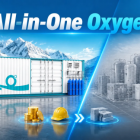
Does an Integrated “All-in-One” Oxygen Machine Really Save on Installation and Engineering Costs?When hospitals compare two PSA oxygen systems, the equipment quotation is usually the easiest part to compare. The more interesting question often comes later: How much work is still left after the equipment arrives on site? A split-type PSA system is not necessarily difficult to install. Experienced oxygen equipment suppliers often provide installation, commissioning and…

09-24-2026
New Oxygen for the “City of the Sage” | Two ZOY Full-Performance Oxygen Shelters Installed at Qufu Second People’s HospitalQufu is known as the hometown of Confucius and the “City of the Sage in the East.” For more than two thousand years, this city has been shaped by Confucian culture and the idea of “benevolence toward others.”That spirit is still very much part of everyday life here. And today, it is also reflected in…
09-24-2026
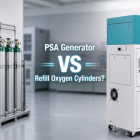
Is It Cheaper for a 50-Bed Clinic in Africa to Refill Oxygen Cylinders or Install a Small On-Site PSA Generator?Why use a 50-bed clinic as the example? Because it sits in an interesting middle ground. A very small clinic may consume too little oxygen to justify its own production system, while a large hospital has more obvious reasons to build dedicated oxygen infrastructure. Around 50 beds, however, the question becomes much more practical: Is…
Submit Request