

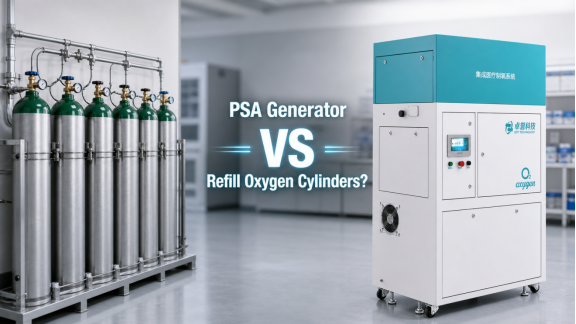
Why use a 50-bed clinic as the example?
Because it sits in an interesting middle ground. A very small clinic may consume too little oxygen to justify its own production system, while a large hospital has more obvious reasons to build dedicated oxygen infrastructure. Around 50 beds, however, the question becomes much more practical:
Is it still cheaper to keep bringing cylinders in, or has the clinic reached the point where producing oxygen on site makes more sense?
For clinic owners and procurement teams, this is rarely a theoretical question. It comes down to oxygen demand, delivery distance, electricity, maintenance and the cost of keeping supply available every day.
At first, cylinders are attractive. There is little upfront investment: order, deliver, use, return.
The problem starts when “a few cylinders” becomes a daily requirement.
Every cylinder has a journey behind it—filling, loading, transport, unloading, storage and return. Add rental or deposits, damaged valves, leakage, handling losses, extra cylinders kept as emergency stock, and occasional urgent deliveries.
The farther the clinic is from its oxygen supplier, the more these recurring costs matter.
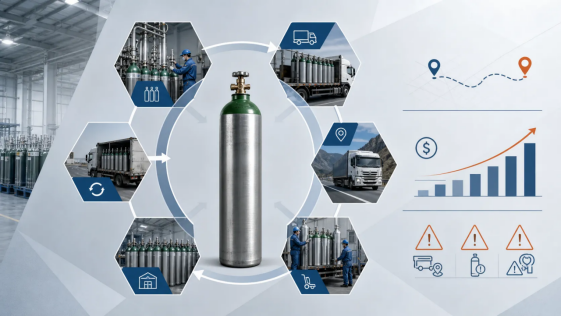
And logistics can become a clinical issue. A truck delayed by heavy rain is inconvenient for most businesses. For a clinic running short of oxygen, staff may have to conserve stock, rearrange procedures, call another supplier or transfer patients.
The cost of cylinder oxygen is therefore not just the gas. It is everything required to keep getting the gas to the bedside.
Two 50-bed clinics can have completely different oxygen requirements.
One may mainly treat general medical patients, with many receiving oxygen intermittently at 1–2 L/min through nasal cannulas. If demand stays low and the supplier is nearby, cylinders may remain perfectly practical.
Another 50-bed clinic may include maternity, an operating theatre, emergency care and several paediatric or critical-care beds. A patient requiring 10–15 L/min during acute treatment can consume oxygen at a very different rate, especially when several patients need it simultaneously.
That is why 50 beds is a clinical starting point, not an oxygen-system sizing formula.
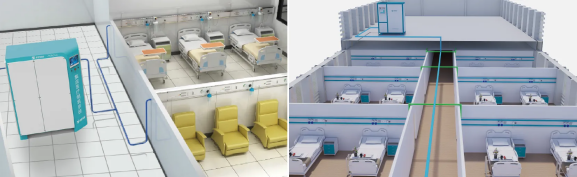
Actual flow rates, peak demand, patient mix, hours of use, delivery distance and delivery frequency matter more.
African projects show how different oxygen demand can become. In Liberia, a WHO-supported PSA plant at Bomi County Hospital was designed for about 9 Nm³/h, while a 50 Nm³/h plant at Star Base could produce around 100 medium-sized cylinders’ worth of oxygen per day and supply other facilities.
The lesson is simple: size the oxygen system around clinical demand, not the number of beds alone.
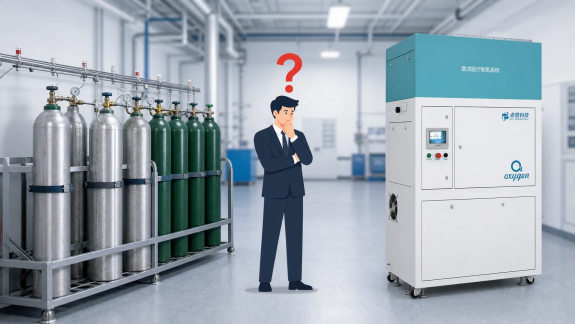
A PSA generator changes the cost structure.
Instead of repeatedly transporting finished oxygen to the clinic, oxygen is generated from ambient air on site. Transport becomes a much smaller part of the recurring supply chain.
But the cost does not disappear. It moves into the infrastructure: electricity, compressor and filtration maintenance, spare parts, oxygen-quality monitoring and technical support.
That trade can make sense when oxygen use is continuous, deliveries are frequent, transport distances are long, or cylinder supply is unreliable.
It can make less sense when demand is low and irregular, the supplier is close, or the project is short-term.
There is another side to the calculation.
A PSA system in a remote clinic still depends on electricity, maintenance and spare parts. Unstable power, heavy dust, high temperatures or limited technical personnel can turn a functioning oxygen plant into an idle asset.
A blocked filter is easy to overlook. A compressor fault may require a replacement part that is not available locally. If nobody on site can maintain the system, the clinic can end up with the same basic problem as an empty cylinder: the equipment is there, but the oxygen is not.
WHO guidance therefore treats reliable power, preventive maintenance, trained personnel and spare-parts availability as essential considerations for PSA systems. In Liberia, backup generators were installed alongside PSA plants because reliable electricity was critical to oxygen production.
This is also where project engineering matters.
ZOY Technology has documented overseas oxygen projects in more than 60 countries, including batch exports to Zambia, as well as oxygen systems for demanding environments such as the Sichuan–Tibet Railway and Hongyuan County. Its portfolio also includes Full Performance Oxygen Containers and integrated central oxygen systems.
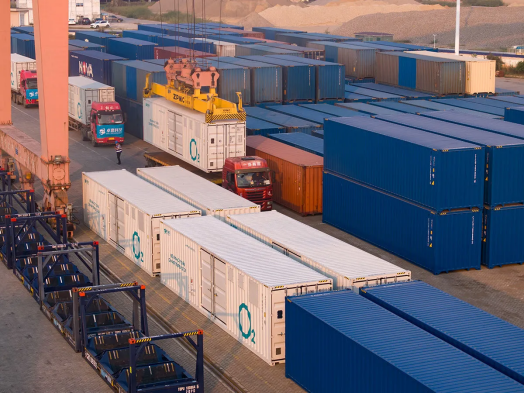
These projects do not mean every African clinic needs the same system. They illustrate a more important point: the oxygen source has to be engineered around the environment in which it will operate.
For a remote clinic, a pre-integrated containerized system can reduce critical assembly work on site. If grid power is unreliable, diesel generation, solar PV, battery storage or another backup strategy may need to be designed into the project, with emergency cylinders retained as a secondary oxygen source.
The comparison is best made over the full operating life of the clinic:
For low, irregular demand and a dependable nearby supplier, cylinders may remain the simpler option.
For continuous demand, frequent deliveries, long transport distances or unreliable cylinder supply, on-site PSA becomes increasingly worth evaluating—provided the clinic can support the required power and maintenance.

The lowest purchase price is not necessarily the lowest five-year cost.
For a remote 50-bed clinic, the question that matters is ultimately straightforward:
What will it cost to keep reliable medical oxygen at the bedside every day?
That is where the economics of cylinder supply and on-site PSA truly separate.
09-24-2026
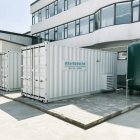
New Oxygen for the “City of the Sage” | Two ZOY Full-Performance Oxygen Shelters Installed at Qufu Second People’s HospitalQufu is known as the hometown of Confucius and the “City of the Sage in the East.” For more than two thousand years, this city has been shaped by Confucian culture and the idea of “benevolence toward others.”That spirit is still very much part of everyday life here. And today, it is also reflected in…
09-18-2026
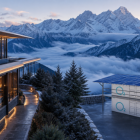
How to Supply Clean Oxygen to a Luxury Hotel in a High-Altitude Mountain Resort?A luxury hotel in a high-altitude region can invest in beautiful architecture, exceptional dining and five-star service—but none of them can change one natural limitation: the low-pressure, oxygen-deficient environment. For guests arriving from lower elevations, the first few hours—or even the first night—can feel very different from a normal hotel stay. Sleep may be less…
09-08-2026
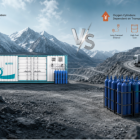
Containerized Oxygen Plants vs. Gas Cylinders: What Is the Real Cost of Oxygen at High-Altitude Mines?A cylinder may look cheap on paper. At a remote, high-altitude mine, the real cost often starts after the cylinder is purchased. Transport, loading and unloading, storage, inventory management, supplier coordination—and the risk of delayed deliveries—all become part of the oxygen bill. For a mine operating for years, these recurring costs can matter far more…
Submit Request