

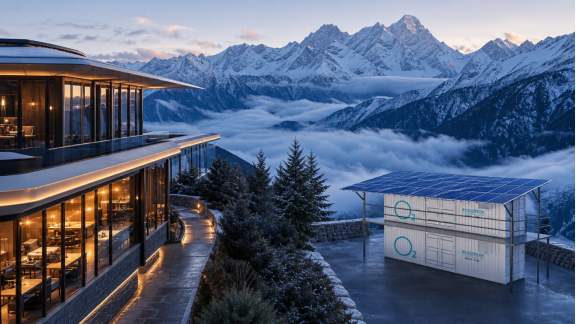
A luxury hotel in a high-altitude region can invest in beautiful architecture, exceptional dining and five-star service—but none of them can change one natural limitation: the low-pressure, oxygen-deficient environment.
For guests arriving from lower elevations, the first few hours—or even the first night—can feel very different from a normal hotel stay. Sleep may be less comfortable, the body needs time to adjust, and activities such as hiking or skiing can make the effects of altitude more noticeable.
This is why oxygen is becoming part of the hospitality offering in some high-altitude destinations. Oxygen-enriched guestrooms, individual oxygen outlets and oxygen-focused wellness services are no longer unusual concepts in mountain resorts.
And the market is already giving hotel owners the answer.
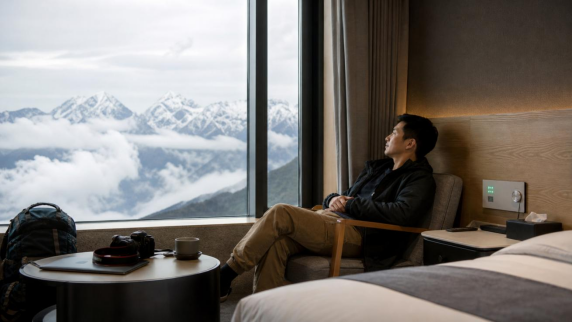
As high-altitude tourism develops, oxygen is moving from an emergency backup toward a genuine part of the guest experience. The more important question is no longer whether hotels need it, but how to build an oxygen system that makes commercial sense.
A 100-room mountain hotel does not necessarily need 100 independent oxygen concentrators.
A centralized oxygen system can generate oxygen at one location and distribute it through dedicated piping to guestrooms and other areas. Different terminal solutions can then serve different guest scenarios.
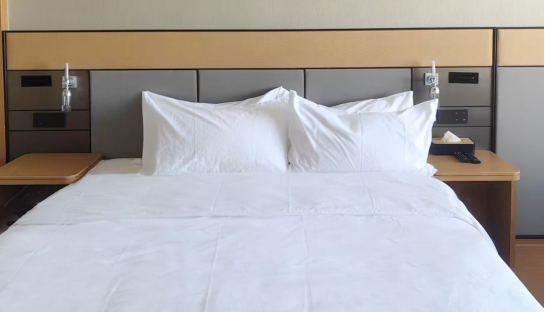
For example, diffused oxygen terminals can continuously enrich the air in guestrooms, while individual oxygen outlets can be used when a guest wants short-term oxygen through a nasal cannula or mask.
This gives hotel operators more flexibility when deciding where oxygen actually adds value. A property might choose to cover every guestroom, selected room categories, or combine room oxygen enrichment with individual oxygen services in a wellness area.
ZOY has implemented this kind of centralized approach in high-altitude hotel projects, combining the oxygen source, distribution network and room terminals into one system rather than treating the oxygen generator as a standalone piece of equipment.
The capacity of the generator is important. But the more useful question is how the oxygen system fits the hotel’s operating model.
There is an assumption in some engineering discussions that oxygen systems need to be planned together with a hotel’s MEP infrastructure from day one.
That is ideal for a new resort. It is not a requirement for every hotel.
Many properties in high-altitude destinations are already operating. They may have no spare mechanical room, limited indoor equipment space, and little appetite for major construction work inside a functioning hotel.
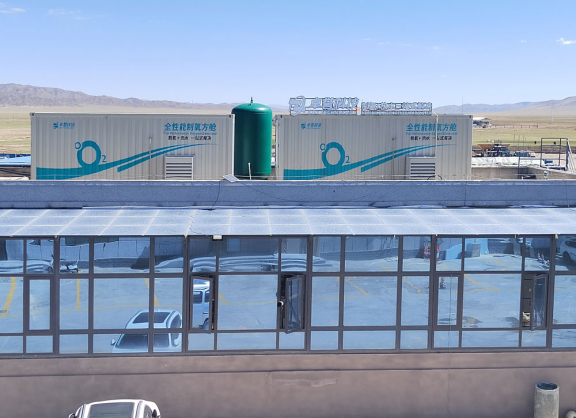
This is where equipment architecture becomes important.
ZOY’s containerized oxygen systems integrate the oxygen generator, air compressor, controls and supporting equipment into a factory-built package. The system can be installed outdoors, avoiding the need to construct a conventional dedicated oxygen plant room. After the required site connections and oxygen distribution piping are prepared, the system can be commissioned as an integrated unit.
For an existing hotel, that can substantially reduce the difficulty of adding oxygen infrastructure.
The plant can sit outside the main guest areas while oxygen is delivered to the rooms through the distribution network. Valuable indoor space remains available for guestrooms, restaurants, spas or other revenue-generating facilities.
So the choice is not simply between planning oxygen from the beginning and giving up on the project later.
With a containerized system, oxygen infrastructure can be added to an operating hotel without rebuilding the hotel around it.
This is where hotel owners should look beyond the equipment quotation.
An oxygen generator is going to consume electricity for years. If two systems have similar oxygen output but very different energy consumption, the difference does not disappear after installation—it appears on every electricity bill that follows.
ZOY’s approach is to look at the oxygen plant as part of the hotel’s wider energy system.
The combination can include energy-efficient oxygen generation, solar PV and compressor waste-heat recovery.
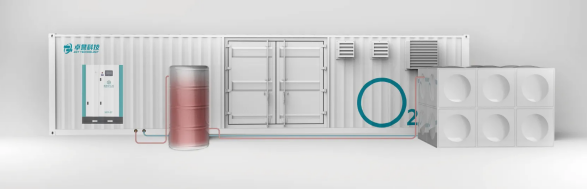
Solar panels can supply part of the electricity required by the oxygen plant, reducing the amount of power purchased from the grid. The oxygen system itself can also use variable-speed air compression and other system-level energy-saving measures to reduce power consumption during operation.
Then there is the heat.
A PSA oxygen system requires compressed air, and the air compressor produces substantial heat during operation. Instead of allowing all of that heat to be rejected, ZOY’s heat-recovery system can capture it and transfer it into the hotel’s hot-water system.
Under suitable operating conditions, ZOY’s integrated systems can provide domestic hot water at more than 70°C, with the available hot-water capacity varying according to the oxygen model and operating conditions.
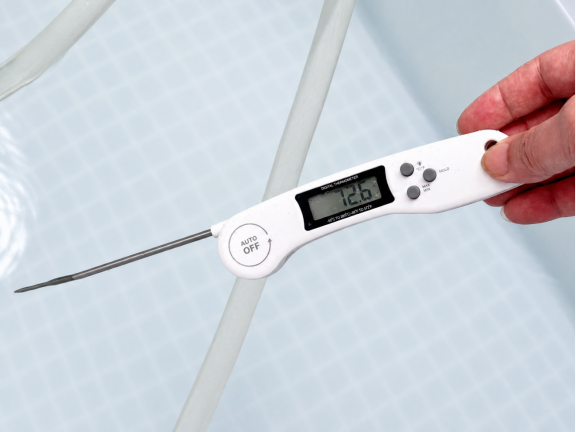
For a hotel, that recovered heat has a very practical destination.
Showers run every day. Kitchens need hot water. Spas consume hot water. Staff facilities consume hot water. Unlike some industrial applications where recovered heat may have limited use, a hotel has a continuous thermal demand.
This is what makes the economics interesting.
The same project can use solar energy to reduce purchased electricity, efficient equipment to reduce oxygen-generation power consumption, and compressor waste heat to reduce the energy required for hot-water production.
Instead of looking at oxygen generation as a new operating expense, the hotel can evaluate the system as part of its overall energy infrastructure.
Depending on the property’s oxygen demand, local electricity prices, solar capacity, hot-water consumption and operating schedule, this combination can reduce direct annual operating costs by hundreds of thousands of RMB in suitable projects.
The exact savings should always be calculated from the individual property’s operating data. But the principle is straightforward: the real cost of an oxygen system is not just what the hotel pays to purchase it; it is what the hotel pays to own and operate it year after year.
ZOY already has hotel projects in exactly this environment.
At Hongyuan in Sichuan, around 3,500 meters above sea level, ZOY supplied a 60 Nm³/h full-performance containerized oxygen system for Yake Hotel, serving all 100 guestrooms with a whole-hotel diffused oxygen system.
In Ali, Tibet, ZOY has also supplied an oxygen-enrichment solution for a hotel with more than 50 guestrooms. The project includes a containerized oxygen source, dedicated oxygen distribution piping and room terminals that monitor parameters including oxygen concentration, temperature, humidity and altitude.
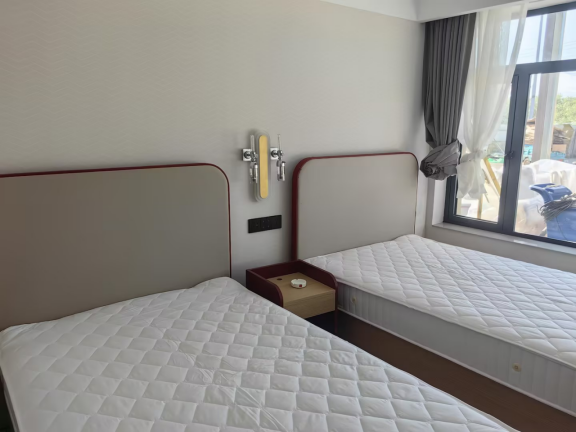
Another hotel in Ali uses ZOY’s integrated oxygen-and-hot-water container solution, combining continuous oxygen generation with heat recovery for hot-water supply.
These projects show what happens when oxygen is treated as part of the property’s infrastructure rather than simply as a piece of equipment.
For a high-altitude hotel, oxygen is becoming part of the product.
But the system behind it should do more than produce oxygen.
It should improve the guest experience.
It should fit the property.
It should save energy.
And it should pay back.
That is the difference between buying an oxygen generator and building an oxygen strategy.
At high altitude, oxygen is a necessity.
For a smart hotel, it can also be an investment.
Founded in 2015 and headquartered in Changsha, China, ZOY Technology specializes in oxygen generation technologies for healthcare and industrial applications. The company integrates research and development, manufacturing, installation, and after-sales service to deliver complete oxygen supply solutions.
Its product portfolio includes PSA medical oxygen generation systems, centralized oxygen supply solutions, integrated oxygen generation stations, industrial oxygen systems, and hyperbaric oxygen chambers. Today, ZOY Technology systems support more than 2,000 healthcare facilities and have been exported to over 60 countries worldwide.
With a strong focus on innovation, ZOY Technology holds multiple core invention patents and continues to invest in advanced oxygen generation technologies. Its solutions have been deployed in hospitals, emergency response projects, railway infrastructure, hospital ships, and regional oxygen supply programs, helping customers build safer, more reliable, and more efficient oxygen supply systems.
By combining scalable system design with long-term operational reliability, ZOY Technology supports healthcare facilities and industrial users throughout every stage of oxygen infrastructure development.
09-08-2026
Containerized Oxygen Plants vs. Gas Cylinders: What Is the Real Cost of Oxygen at High-Altitude Mines?A cylinder may look cheap on paper. At a remote, high-altitude mine, the real cost often starts after the cylinder is purchased. Transport, loading and unloading, storage, inventory management, supplier coordination—and the risk of delayed deliveries—all become part of the oxygen bill. For a mine operating for years, these recurring costs can matter far more…
09-02-2026
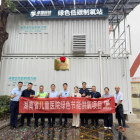
China’s First Green Electricity Low-Carbon Oxygen Station Officially Commissioned at Hunan Children’s HospitalRecently, China’s first green electricity-powered low-carbon oxygen station was officially commissioned at Hunan Children’s Hospital. As a National Regional Medical Center for Children and a Grade III Class A specialized children’s hospital, the hospital has long placed strong emphasis on its social responsibility, particularly by actively responding to national policies on energy conservation, cost reduction,…
08-28-2026
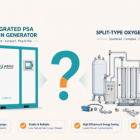
All-in-One vs. Split-Type PSA Oxygen Systems: What Are You Really Paying For?When hospitals compareAll-in-One vs. Split-Type PSA Oxygen Systems: What Are You Really Paying For? When hospitals compare PSA oxygen systems, the discussion usually starts with flow rate, oxygen purity, power consumption and equipment price. But once the project reaches installation, the questions become more practical: Where will the system go? How much space is available?…
Submit Request