

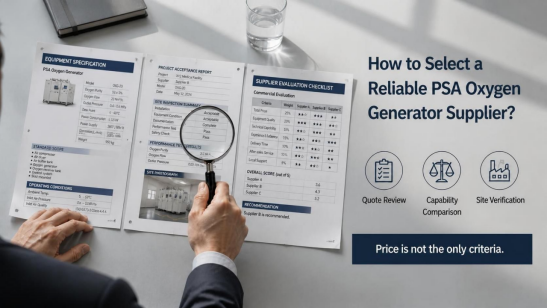
You receive three quotations for a PSA oxygen generator from China. One offers a lower price, another promises faster delivery, and all three suppliers claim to be manufacturers. Their brochures look professional, their specifications seem similar, and each has photos of factory workshops and overseas projects.
So, how do you decide who you can actually trust?
The real problem often appears after the order is placed: the delivered system does not match expectations, technical questions go unanswered, or responsibility becomes unclear when something goes wrong. For overseas buyers investing in medical oxygen systems, choosing the wrong supplier can mean more than wasted money. It can lead to costly delays and difficulties keeping essential equipment running.
Before comparing prices, you need to know what stands behind the quotation—and how to verify it.
A company may describe itself as a manufacturer, but that does not always mean it handles production and engineering itself. Some exporters work with partner factories, while others assemble components supplied by different companies.
Neither model is automatically unreliable. The key is to understand who is responsible for the equipment.
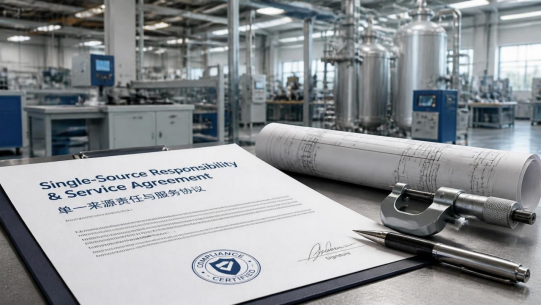
Check the company's registered identity, production address and the relationship between the exporter and the manufacturer. If they are different entities, clarify who controls quality, approves technical changes and handles problems after delivery.
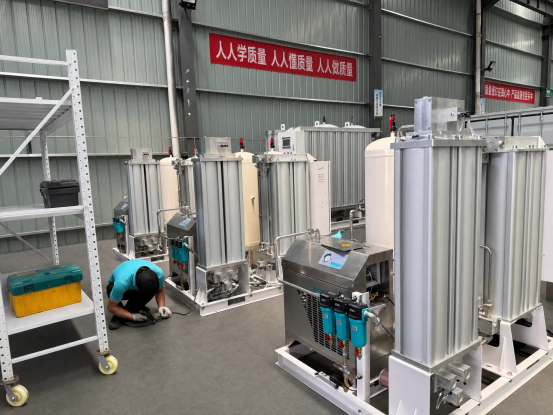
A live factory tour can provide useful evidence. Look for real production, assembly and engineering activities rather than relying only on promotional photos.
For buyers evaluating ZOY Technology, its R&D, production, assembly and system-integration processes provide a clearer picture of its manufacturing capabilities than the label “source factory” alone.
A PSA oxygen plant is more than an oxygen generator. Depending on the project, it may include an air compressor, air treatment equipment, storage tanks, control systems and other supporting components.
A manufacturer does not need to produce every component in-house. What matters is whether it can integrate these components into a reliable system and take responsibility for the overall performance.
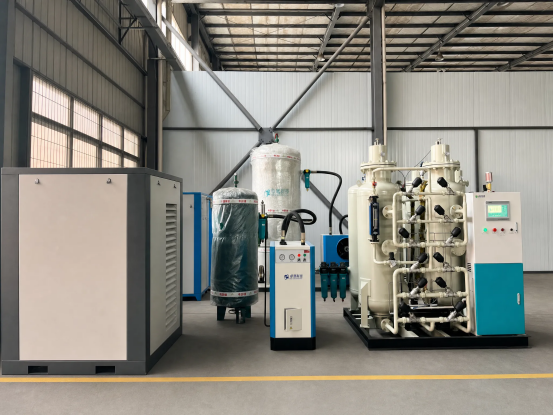
Ask who designs the system configuration, how the components work together, and who handles commissioning. Can the supplier explain how the proposed system will meet your required oxygen flow, purity and operating pressure?
A credible supplier should be able to explain these decisions clearly, rather than simply provide a list of equipment.
This is especially important for overseas projects, where limited local technical resources can make installation and troubleshooting more difficult.
A product datasheet tells you what a system is designed to achieve. Testing records help show whether the actual equipment meets the agreed requirements.
Before paying a deposit, ask for the relevant factory inspection and performance-testing procedures. Check whether the records match the model you intend to purchase, whether the test conditions are clear, and whether the acceptance criteria match your technical agreement.
Also, understand the difference between certification and performance testing. A quality management certificate, a product compliance document and a factory test report serve different purposes.
For example, if the quotation specifies 93% oxygen purity, confirm how purity is measured and documented before shipment. Do not rely on a specification sheet alone.
ZOY can demonstrate its quality-control approach through genuine pre-shipment testing footage, inspection records and clear explanations of its testing process.
A supplier may export to many countries, but export reach alone does not prove experience with your application.
A hospital in a major city has different requirements from a remote clinic with limited maintenance resources. Compare project references by application, system capacity, installation conditions and technical requirements.
Ask for real installation photos, equipment configurations and commissioning information where available. Customer references can also help, provided they can be verified with permission.
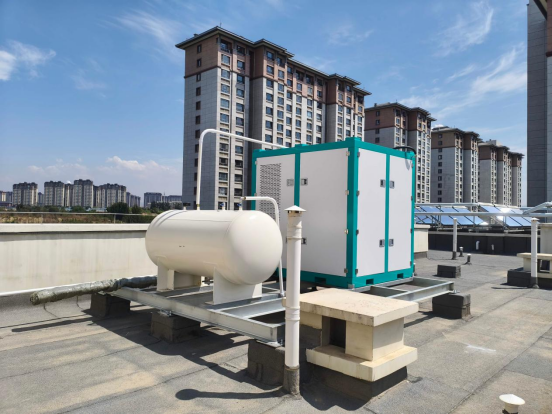
When reviewing ZOY's international projects, buyers should look at what equipment was supplied, what role ZOY performed and whether the project is completed or still under construction. Clear context is more useful than a long list of countries.
The goal is to find evidence that the supplier has handled challenges similar to yours.
A PSA oxygen system is a long-term investment. If a problem occurs thousands of miles from the factory, who will diagnose it, supply spare parts and arrange technical assistance?
Before ordering, confirm warranty coverage, commissioning, operator training, spare-parts availability and technical support channels. If a local service partner is involved, define each party's responsibilities in writing.
Remote monitoring can help operators track system status and identify potential issues, but it does not replace every maintenance task or physical repair. Ask what the monitoring service covers and what response arrangements are available.
ZOY's approach reflects an important principle: successful delivery means more than shipping equipment. It also requires clear technical responsibilities and a practical support plan.
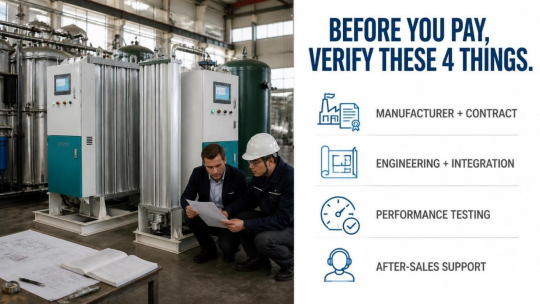
Before paying, make sure you can answer four questions:
These checks do not mean every component must be manufactured in-house, or that every trading company should be excluded. They help you identify whether the supplier's responsibilities are transparent and whether its claims can be verified.
The right PSA oxygen generator supplier is not simply the one offering the lowest quotation. It is the one that can demonstrate its capabilities, verify the system's performance and remain accountable after delivery.
09-30-2026
Does an Integrated “All-in-One” Oxygen Machine Really Save on Installation and Engineering Costs?When hospitals compare two PSA oxygen systems, the equipment quotation is usually the easiest part to compare. The more interesting question often comes later: How much work is still left after the equipment arrives on site? A split-type PSA system is not necessarily difficult to install. Experienced oxygen equipment suppliers often provide installation, commissioning and…
09-24-2026
New Oxygen for the “City of the Sage” | Two ZOY Full-Performance Oxygen Shelters Installed at Qufu Second People’s HospitalQufu is known as the hometown of Confucius and the “City of the Sage in the East.” For more than two thousand years, this city has been shaped by Confucian culture and the idea of “benevolence toward others.”That spirit is still very much part of everyday life here. And today, it is also reflected in…
09-24-2026
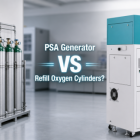
Is It Cheaper for a 50-Bed Clinic in Africa to Refill Oxygen Cylinders or Install a Small On-Site PSA Generator?Why use a 50-bed clinic as the example? Because it sits in an interesting middle ground. A very small clinic may consume too little oxygen to justify its own production system, while a large hospital has more obvious reasons to build dedicated oxygen infrastructure. Around 50 beds, however, the question becomes much more practical: Is…
Submit Request