

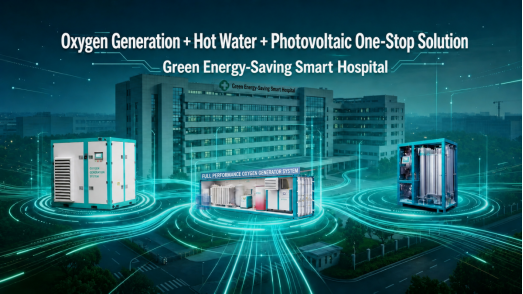
Across more than 2,000 hospital and institutional projects worldwide, ZOY Technology has observed a consistent pattern: an oxygen generation project is never just a procurement decision.
The operating environments behind these projects vary significantly.
Oxygen system requirements change across regions such as Africa, the Americas and Europe due to logistics, regulations and infrastructure maturity. Requirements also differ between rural clinics, county hospitals and large urban medical centers.
For this reason, oxygen infrastructure cannot be designed based only on equipment specifications.
Real-world projects are shaped by demand patterns, geography, climate, logistics constraints, operating cost structures and long-term expansion needs. The same oxygen generator can operate in very different ways depending on its deployment context.
Over the past decade, ZOY Technology has contributed to projects across hospitals, government healthcare programs, plateau infrastructure, emergency response systems, commercial buildings and industrial facilities. One conclusion has become increasingly clear: system success depends on how well the engineering matches the scenario, not just the equipment selection.
Based on this experience, the following sections present a scenario-based guide to oxygen infrastructure planning, helping identify which system design approach fits different operational environments.
Hospitals rarely remain static after commissioning.
New departments are added, patient volume increases, and clinical services expand over time. As a result, oxygen demand often grows continuously after the initial installation.
Because of this, scalable infrastructure often delivers more long-term value than oversized upfront installations. Instead of replacing entire systems when demand increases, modular expansion allows capacity to grow alongside hospital development while preserving the original investment.
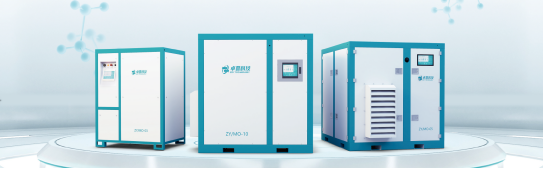
Several healthcare projects delivered by ZOY Technology have followed this approach, including a county hospital expansion project in Changsha, a hospital project in Peru, and a regional medical center that expanded oxygen capacity in phases. In each case, the system was designed for current demand while maintaining clear pathways for future expansion.
The key principle is straightforward: oxygen infrastructure should not only match current consumption, but also accommodate future growth.
In many developing regions, oxygen generation technology is not the limiting factor. Distribution is.
Many grassroots hospitals and government healthcare programs still rely on cylinder transport or liquid oxygen deliveries over long distances. These supply chains are exposed to weather disruptions, poor road conditions, rising transport costs and logistics instability.
From experience across multiple international projects, on-site oxygen generation provides more than cost reduction. Its main value is supply independence.
ZOY Technology’s containerized oxygen generation systems produce oxygen directly at the installation site and include integrated cylinder filling capability. This removes dependence on external delivery networks and supports continuous local production.
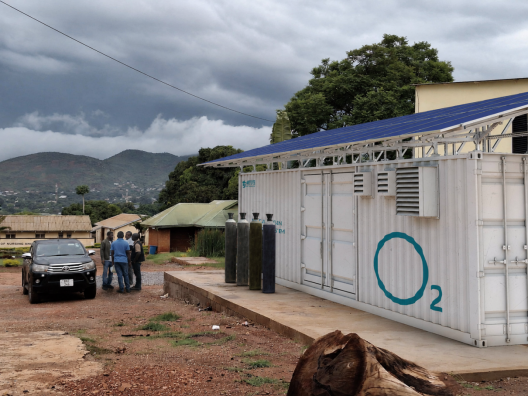
In remote environments, oxygen quality alone is not sufficient as a performance indicator. The most important metric becomes uninterrupted availability throughout the year.
High-altitude and remote environments place the most demanding conditions on oxygen infrastructure.
In projects such as the Qinghai-Tibet Railway, the Hongyuan plateau project and the Ali region deployment, the challenge was not only oxygen production. It was maintaining stable system operation under low air density, rapid temperature shifts and limited maintenance access.
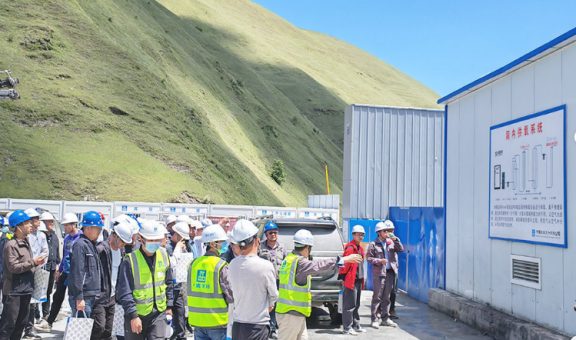
At high altitude, compressor intake conditions change significantly compared to sea level. This directly affects efficiency and operational stability. At the same time, remote locations require systems that are easier to transport, install and maintain, since frequent service visits are often impractical.
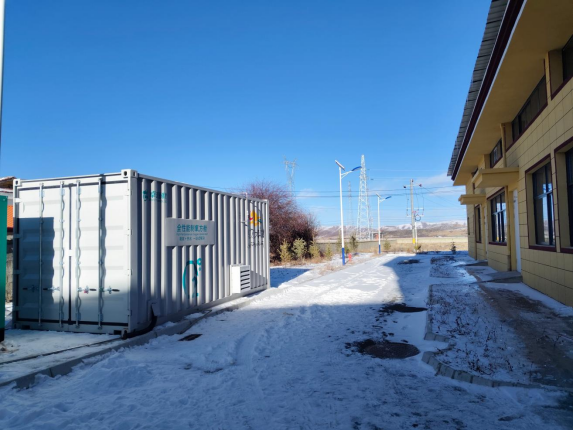
As a result, these projects relied on modular containerized systems, reinforced environmental protection design and remote monitoring capabilities to reduce on-site intervention.
These cases show that plateau and remote oxygen systems must be engineered specifically for altitude, accessibility and long-term operational stability, rather than adapted from standard hospital configurations.
Not all oxygen projects follow long planning cycles.
Some must be deployed rapidly due to emergencies, disasters or sudden infrastructure requirements. Temporary medical stations, emergency clinics and mobile healthcare shelters all require fast commissioning.
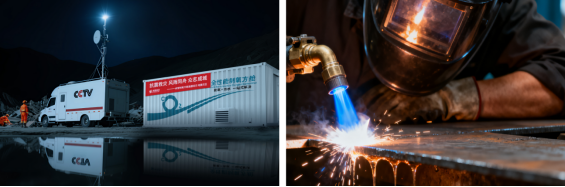
In these scenarios, system deployment speed becomes as important as oxygen output capacity.
This is one reason containerized oxygen generation systems are widely used. Key components are pre-assembled at the factory, reducing on-site installation work. Plug-and-play electrical design simplifies commissioning, often requiring only power connection and pipeline integration for operation.
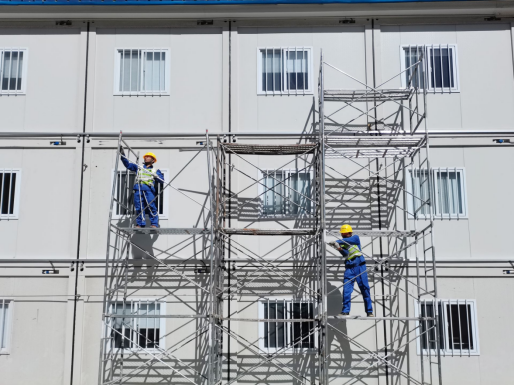
Compared with conventional field-assembled systems, this approach significantly reduces setup time. In emergency conditions, even small reductions in deployment time can materially improve medical response capacity.
Modern hospital planning evaluates oxygen systems using broader criteria than output alone.
Installation efficiency, energy consumption and lifecycle maintenance have become equally important considerations.
ZOY Technology integrates these factors into system design through several engineering approaches:
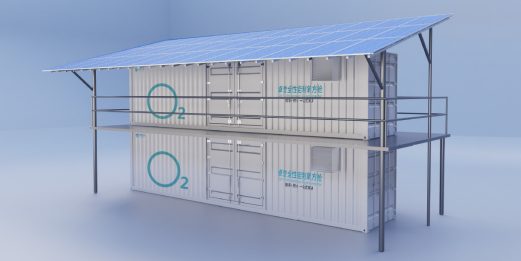
In practical application, a county-level hospital can reduce annual operating expenses by approximately one million RMB through improved system efficiency.
Together, these design approaches shift oxygen infrastructure from isolated equipment toward integrated, resource-efficient utility systems.
Every project generates new engineering experience.
Across hospitals, public infrastructure, high-altitude regions and international healthcare programs, ZOY Technology has consistently found that no two oxygen projects are identical.
However, one engineering principle remains stable across all scenarios: systems must be designed around real operating conditions, long-term reliability and future expansion potential.
This principle continues to guide oxygen system development across global applications.
About ZOY TECH
Founded in 2015 and headquartered in Changsha, China, ZOY TECH specializes in oxygen generation technologies for healthcare and industrial applications. The company integrates research and development, manufacturing, installation and after-sales service to provide complete oxygen supply solutions. Its product portfolio includes PSA medical oxygen generation systems, centralized oxygen supply systems, integrated oxygen generation stations, industrial oxygen systems and hyperbaric oxygen chambers. Today, ZOY solutions serve more than 2,000 healthcare facilities and customers across more than 60 countries. Supported by continuous innovation, multiple core invention patents and extensive project experience, ZOY TECH is committed to helping hospitals and industrial users build safer, smarter, more energy-efficient and more sustainable oxygen infrastructure.
08-20-2026
From the Tibetan Plateau to Africa: How Hunan ZOY Technology Co.,Ltd., an “Invisible Champion” in Oxygen Generation, Broke Through Over a Decade and Carved Out Its Niche in the Trillion Yuan scale MarketAt 2 a.m., a hospital in Hunan is quietly operating as usual. Its oxygen supply system runs around the clock. The equipment comes from Hunan ZOY Technology Co., Ltd., a company based in Changsha Economic and Technological Development Zone. In hospitals, oxygen supply is rarely noticed, yet it cannot stop for a moment. And this…
08-20-2026
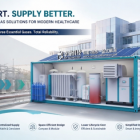
From Single Oxygen Units to Integrated Energy-Saving Oxygen Systems: Full System Integration Is the Future for HospitalsKey Takeaway : ZOY Technology redefines central medical gas infrastructure by integrating its proprietary PSA oxygen generation systems (3–10 Nm³/h compact units to 50+ Nm³/h containerized plants) with trusted medical air, vacuum, and optional high-pressure cylinder filling packages into a single energy-saving hub. Featuring waste heat recovery (70–73°C hot water) and Solar PV hybrid power,…
08-14-2026
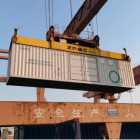
Containerized Oxygen Generator System for Remote Gold Mines in Africa: Reliable Supply with Diesel BackupRemote gold mining operations in Africa often face a major infrastructure challenge: maintaining a stable oxygen supply in locations where grid power is unreliable, transportation is difficult, and environmental conditions are extreme. For these sites, selecting an oxygen system is not only about oxygen purity or production capacity. The real challenge is building a reliable…
Submit Request