

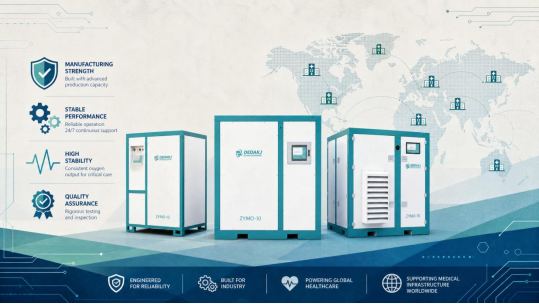
China has become a core global production base for PSA oxygen systems.
According to publicly available trade and medical equipment industry reports (including UN Comtrade and market research datasets such as Fortune Business Insights and Mordor Intelligence), Asia—led by China—now accounts for a significant and growing share of global medical oxygen equipment manufacturing and export supply.
But cost is no longer the main driver.
Global hospitals now choose Chinese manufacturers for three structural reasons:
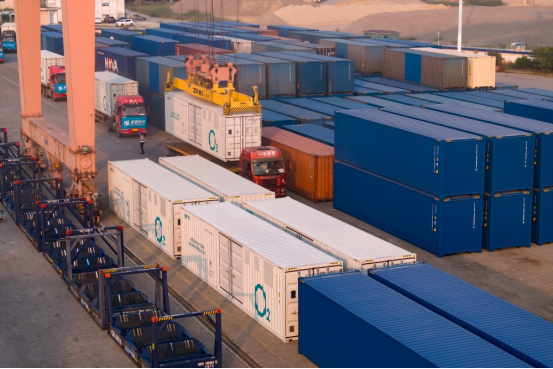
Modern procurement has shifted.Buyers no longer ask only “what equipment to buy.”
They now ask “who built this system, and how it was engineered.”
Product specifications define what a system can do on day one. Manufacturing capability defines whether it can still do it ten years later. Two PSA oxygen systems may show identical oxygen purity and flow rate in initial tests. But long-term performance often diverges. The reason is not external use—it is internal manufacturing tolerance.
Key factors include:
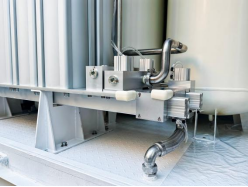
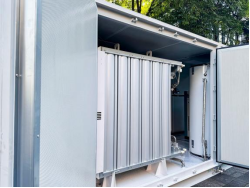
In PSA systems, even a 1–2% deviation in airflow distribution can compound over tens of thousands of cycles. This leads to measurable differences in purity stability and energy efficiency over time.
Manufacturing precision is not a secondary parameter.
It is the system itself.
The difference between assembly factories and integrated manufacturers is structural, not cosmetic.
| Dimension | Traditional Assembly Model | Integrated Manufacturing Model |
| Core Structure | Supply chain assembly | Full-stack internal system |
| Engineering Design | External drawings | Independent mechanical, electrical, PLC design |
| Production Control | Multi-vendor dependency | Single-system quality control |
| Traceability | Fragmented | End-to-end lifecycle tracking |
| System Output | Equipment assembly | Engineering-driven oxygen systems |
Integrated manufacturers control the full chain:
As a representative of this modern integrated approach, ZOY TECH has moved beyond the traditional assembly-only model. From system design and PLC programming to final assembly, every key stage is managed in-house. This integrated structure reduces variation between suppliers and improves long-term system stability in real hospital environments.
Long-term reliability is not created during installation. It is built during design and manufacturing.
PSA oxygen systems operate under continuous pressure cycles, thermal variation and airflow fluctuation. Stability depends on system-level engineering, not isolated components.
Core engineering mechanisms include:
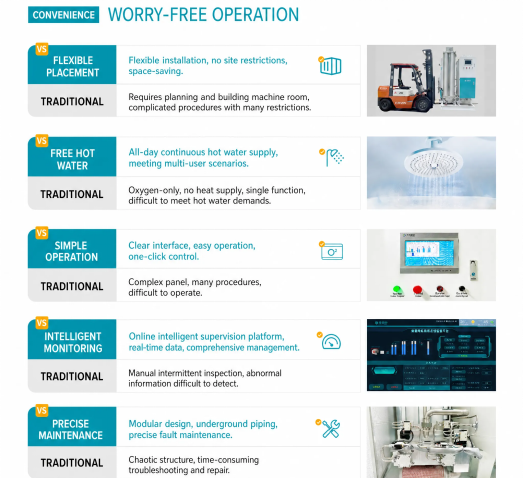
These mechanisms work together as one system. Over time, they evolve into proprietary engineering IP. In ZOY Technology’s case, this development process has resulted in 13 core invention patents, covering system control, energy optimization and integrated oxygen generation architecture.
Patents are not the starting point. They are the result of long-term engineering iteration.
Each project introduces different engineering challenges.
ZOY Technology has delivered oxygen infrastructure across more than 60 countries and 2,000 healthcare facilities, while also participating in demanding projects such as the Ali region in Tibet, Hongyuan County on the Sichuan Plateau, and the New Sichuan–Tibet Railway.
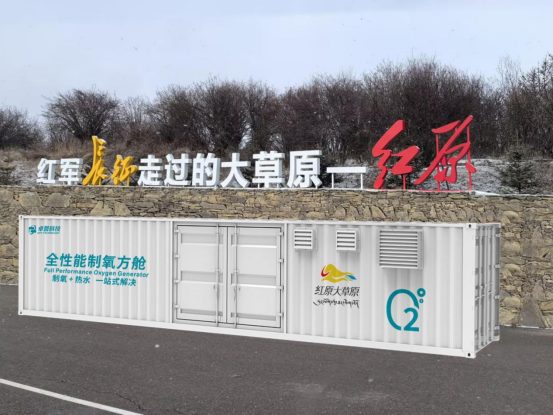
These environments continuously refine manufacturing capability:
· Ali, Tibet → optimized compressor intake, PLC compensation algorithms and oxygen production efficiency for high-altitude, low-pressure environments.
· Hongyuan County, Sichuan → enhanced thermal management and system stability under large day–night temperature fluctuations.
· New Sichuan–Tibet Railway → strengthened modular integration, vibration resistance and long-term reliability for plateau infrastructure with limited maintenance access.
· Sub-Saharan Africa → improved moisture protection, multi-stage air filtration and corrosion resistance for hot, humid operating conditions.
· Regions with unstable power supply → integrated photovoltaic (PV)-compatible power solutions, intelligent energy management and fault-tolerant control to ensure continuous oxygen production during grid instability.
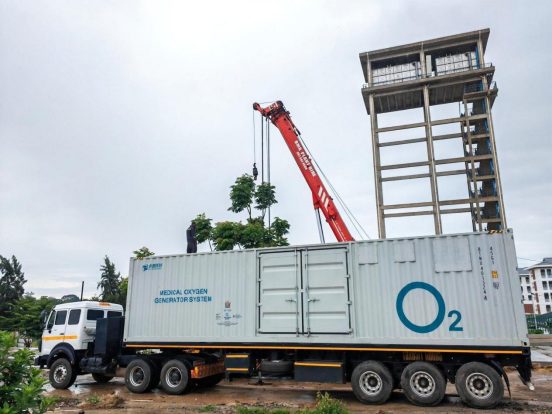
Every project generates engineering data. Every engineering improvement returns to manufacturing. This continuous feedback loop transforms field experience into product innovation, allowing each new generation of oxygen systems to perform more reliably than the last.
In global procurement, surface specifications are no longer sufficient. Real evaluation must focus on manufacturing ownership and engineering depth.
A supplier that meets these conditions is not an assembler. It is a manufacturing system owner.
The global oxygen infrastructure market is undergoing structural change. Chinese PSA oxygen manufacturers are no longer only equipment exporters. They are becoming system-level participants in global healthcare infrastructure. Manufacturing capability is now a primary factor in procurement decisions, alongside cost and specification. In this shift, selecting a manufacturer is no longer a purchasing action.It is a long-term infrastructure decision.
Founded in 2015 and headquartered in Changsha, China, ZOY Technology specializes in oxygen generation technologies for healthcare and industrial applications. The company integrates research and development, manufacturing, installation, and after-sales service to deliver complete oxygen supply solutions.
Its product portfolio includes PSA medical oxygen generation systems, centralized oxygen supply solutions, integrated oxygen generation stations, industrial oxygen systems, and hyperbaric oxygen chambers. Today, ZOY Technology systems support more than 2,000 healthcare facilities and have been exported to over 60 countries worldwide.
With a strong focus on innovation, ZOY Technology holds multiple core invention patents and continues to invest in advanced oxygen generation technologies. Its solutions have been deployed in hospitals, emergency response projects, railway infrastructure, hospital ships, and regional oxygen supply programs, helping customers build safer, more reliable, and more efficient oxygen supply systems.
By combining scalable system design with long-term operational reliability, ZOY Technology supports healthcare facilities and industrial users throughout every stage of oxygen infrastructure development.

08-20-2026
From the Tibetan Plateau to Africa: How Hunan ZOY Technology Co.,Ltd., an “Invisible Champion” in Oxygen Generation, Broke Through Over a Decade and Carved Out Its Niche in the Trillion Yuan scale MarketAt 2 a.m., a hospital in Hunan is quietly operating as usual. Its oxygen supply system runs around the clock. The equipment comes from Hunan ZOY Technology Co., Ltd., a company based in Changsha Economic and Technological Development Zone. In hospitals, oxygen supply is rarely noticed, yet it cannot stop for a moment. And this…
08-20-2026
From Single Oxygen Units to Integrated Energy-Saving Oxygen Systems: Full System Integration Is the Future for HospitalsKey Takeaway : ZOY Technology redefines central medical gas infrastructure by integrating its proprietary PSA oxygen generation systems (3–10 Nm³/h compact units to 50+ Nm³/h containerized plants) with trusted medical air, vacuum, and optional high-pressure cylinder filling packages into a single energy-saving hub. Featuring waste heat recovery (70–73°C hot water) and Solar PV hybrid power,…
08-14-2026
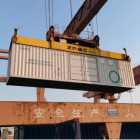
Containerized Oxygen Generator System for Remote Gold Mines in Africa: Reliable Supply with Diesel BackupRemote gold mining operations in Africa often face a major infrastructure challenge: maintaining a stable oxygen supply in locations where grid power is unreliable, transportation is difficult, and environmental conditions are extreme. For these sites, selecting an oxygen system is not only about oxygen purity or production capacity. The real challenge is building a reliable…
Submit Request