

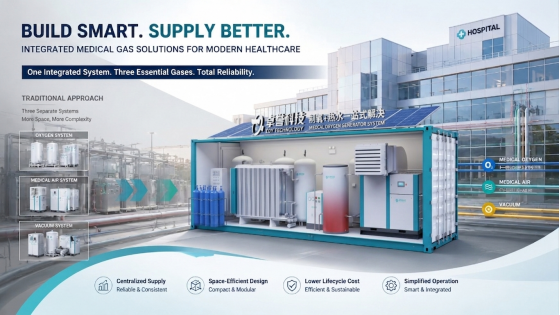
ZOY Technology redefines central medical gas infrastructure by integrating its proprietary PSA oxygen generation systems (3–10 Nm³/h compact units to 50+ Nm³/h containerized plants) with trusted medical air, vacuum, and optional high-pressure cylinder filling packages into a single energy-saving hub. Featuring waste heat recovery (70–73°C hot water) and Solar PV hybrid power, ZOY eliminates interface risks while cutting operating costs. Validated across 2,000+ facilities in 60+ countries, this integrated approach transforms central gas plants into resilient utility assets.
When building or upgrading healthcare facilities, hospital directors face a fundamental decision: Should we continue procuring medical oxygen, compressed air, and vacuum systems separately, or deploy an integrated, all-in-one central gas plant?
Understanding this choice requires evaluating how traditional procurement operates, why its hidden costs add up, and how modern engineering turns medical gas plants into energy-saving utility hubs.
Historically, hospitals procured medical oxygen generators, compressed air units, and vacuum pumps from different standalone equipment vendors.
Lower Initial Unit Bidding: Sourcing individual machines can appear cheaper on initial purchase orders.
Flexible Sourcing Timelines: Facilities can purchase utility equipment in separate budgetary phases.
Interface & Pressure Mismatches: Independent gas lines frequently experience dynamic pressure drops in critical care wards because separate control panels do not communicate.
Fragmented Monitoring & Divided Responsibility: Operating three disconnected display panels creates monitoring blind spots for Building Management Systems (BMS). When system pressure drops, vendors pass blame to one another, leaving the hospital engineering team managing the gap.
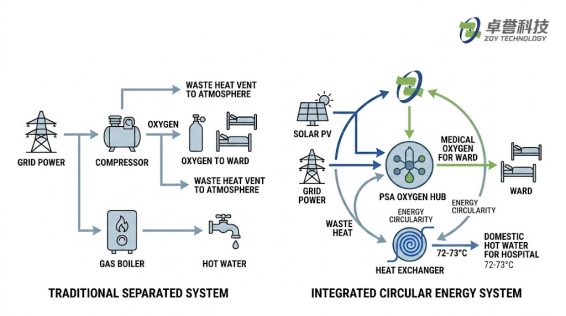
Compounded Energy Waste: Air compressors run 24/7/365, consuming massive amounts of electricity. In traditional installations, up to 80% of this energy converts into thermal exhaust that is vented outdoors as waste—while the hospital burns additional fuel or electricity in boilers just to heat water for daily sanitation.
The All-in-One Advantage: An authentic integrated solution relies on one accountable engineering partner who manufactures the core oxygen technology and manages the seamless integration of matching air and vacuum utility packages, eliminating interface mismatches while capturing wasted energy for facility reuse.
Implementing a true all-in-one medical gas plant requires moving beyond product catalog bundling to design a coordinated energy-gas infrastructure:
Core Medical Gas Supply + Integrated Cylinder Backup + Thermal Recovery + Solar Hybrid Power
Traditional Model:
[ Fragmented Gas Vendors ] ──► Uncoordinated Controls + Heat Vented to Air + High Energy Bills
ZOY Integrated Architecture:
[ Solar PV / Grid ] ──► [ Integrated Gas Hub ] ──► Oxygen, Air, Vacuum & Cylinder Filling
│
└──► [ Heat Exchanger ] ──► 70–73°C Hot Water for Facility Use
Step 1: Core Oxygen Manufacturing & Coordinated Utility Integration
Anchor the plant with ZOY’s proprietary PSA oxygen system (3–50+ Nm³/h), seamlessly paired with vetted medical air and vacuum packages linked under a single telemetry control panel. Crucially, integrating an optional high-pressure cylinder filling system into containerized or modular plants allows hospitals to fill emergency backup cylinders on-site, ensuring 100% gas self-sufficiency without relying on external liquid gas deliveries.
Step 2: Waste Heat Recovery for Hot Water Production
Built-in heat exchangers capture compression heat during oxygen generation. Under suitable conditions, the system continuously produces domestic hot water at 70°C to 73°C for patient bathing, ward cleaning, and laundry—directly offloading boiler electricity bills.
Step 3: Solar PV Hybrid Integration
In high-tariff or unstable grid regions, the central plant natively prioritizes direct solar PV power during daylight hours, seamlessly falling back to grid power only when necessary.
| Utility Requirement | Traditional Equipment-Only Model | ZOY Integrated Engineering Model |
| Manufacturing Scope | Sourced from multiple isolated hardware vendors | ZOY core PSA oxygen manufacturing + Vetted air & vacuum system matching |
| Accountability | Multiple equipment vendors passing blame | Single-point engineering responsibility (ZOY as turnkey integrator) |
| Energy Strategy | 100% grid dependence; heat vented outdoors | Solar PV hybrid + Thermal recovery (70–73°C hot water) |
| Plant Deployment | Complex, multi-vendor on-site assembly | Factory-tested 20GP / 40HQ containerized plug-and-play units |
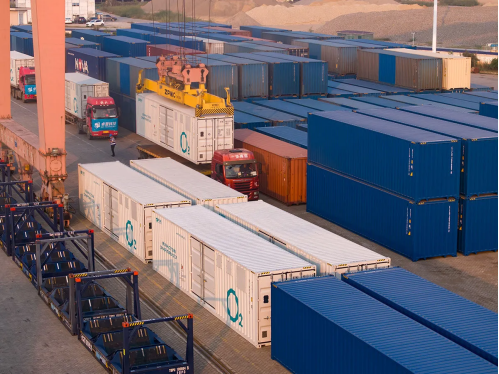
This integrated approach is field-proven across demanding medical environments worldwide:
Containerized Plants with Cylinder Filling (20GP / 40HQ): In rapid-deployment or regional hospital projects, ZOY integrates its proprietary PSA oxygen plants, matched air compressors, vacuum pumps, thermal exchangers, and high-pressure cylinder filling ramps inside single weatherproof shelters. These turnkey plants eliminate field piping errors and ensure immediate emergency back-up filling capabilities.
Extreme Climate Resilience: Proven in tropical and high-temperature regions across Asia, Africa, and South America, ZOY’s infrastructure operates reliably in ambient temperatures up to 45°C and relative humidity levels of 80–95%, delivering compressed air dew points of −56.2°C to −61°C.
Global Track Record: Deployed across mobile hospital ships, tropical clinics, and over 2,000 healthcare facilities in more than 60 countries—proving that combining core manufacturing strength with expert engineering integration delivers unmatched operational stability and long-term cost savings.
A hospital does not simply need three separate utility machines; it needs a reliable, energy-efficient medical gas infrastructure. By combining proprietary PSA oxygen generation with matched medical air, vacuum, cylinder filling, heat recovery, and solar integration under one engineering umbrella, ZOY Technology lowers 10-year operating expenditure while securing single-point technical support for the lifecycle of the facility.
09-30-2026
Does an Integrated “All-in-One” Oxygen Machine Really Save on Installation and Engineering Costs?When hospitals compare two PSA oxygen systems, the equipment quotation is usually the easiest part to compare. The more interesting question often comes later: How much work is still left after the equipment arrives on site? A split-type PSA system is not necessarily difficult to install. Experienced oxygen equipment suppliers often provide installation, commissioning and…
09-24-2026
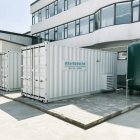
New Oxygen for the “City of the Sage” | Two ZOY Full-Performance Oxygen Shelters Installed at Qufu Second People’s HospitalQufu is known as the hometown of Confucius and the “City of the Sage in the East.” For more than two thousand years, this city has been shaped by Confucian culture and the idea of “benevolence toward others.”That spirit is still very much part of everyday life here. And today, it is also reflected in…
09-24-2026
Is It Cheaper for a 50-Bed Clinic in Africa to Refill Oxygen Cylinders or Install a Small On-Site PSA Generator?Why use a 50-bed clinic as the example? Because it sits in an interesting middle ground. A very small clinic may consume too little oxygen to justify its own production system, while a large hospital has more obvious reasons to build dedicated oxygen infrastructure. Around 50 beds, however, the question becomes much more practical: Is…
Submit Request