

At 2 a.m., a hospital in Hunan is quietly operating as usual. Its oxygen supply system runs around the clock. The equipment comes from Hunan ZOY Technology Co., Ltd., a company based in Changsha Economic and Technological Development Zone. In hospitals, oxygen supply is rarely noticed, yet it cannot stop for a moment. And this “invisible” sector is now on the verge of a trillion yuan industrial transformation.
Ten years ago, Huang Gang, who was then engaged in the air compressor business, made a judgment: oxygen generation would be the next business with high technical barriers. He decided to extend his business from compressed air into oxygen separation, creating a second growth curve. The team then entered the medical oxygen generation sector. Ten years later, ZOY Technology has achieved an expected annual output value of over RMB 120 million, serving more than 1,600 hospitals, with its products exported to more than 60 countries and regions.
The company's biggest strength is not its size, but the fact that it has tested itself in places where others were reluctant to go. Its equipment has operated in tunnels along the Sichuan Tibet Railway at altitudes of around 4,000 meters, aboard the naval hospital ships Silk Road Ark and Auspicious Ark, in the ruins of the Tingri County earthquake at temperatures below 10°C, and supporting critical oxygen supply lifelines in Wuhan during the COVID 19 pandemic. These “extreme scenarios” have become some of ZOY's strongest credentials.
Today, this “little giant” enterprise is quietly gaining ground in China's medical oxygen generation sector. A new 8,000 square meter workshop has been put into operation, strategic channel cooperation with UIH MedInfo (United Imaging Medical Information Technology) is expanding, and its integrated oxygen generation, solar PV power and hot water solution has already been put into practical use. Orders are also accelerating. Policy support and market demand are creating a favorable combination of factors, and this company, which has spent ten years building its foundation, is now at a point worth watching.

In 2007, Huang Gang founded Shungao Electromechanical in Changsha, focusing on air compressors and independently developed powder conveying systems. The company served major enterprises including SANY, Zoomlion, XCMG, CRCHI and Shantui Construction Machinery. One product alone generated annual revenue of around RMB 30 million, while total annual sales exceeded RMB 100 million.
But as the market matured, growth began to slow. Huang Gang needed a second growth curve. During his research, he identified an overlooked problem: China has more than one million medical and healthcare institutions, many of which still rely on cylinder oxygen and liquid oxygen. Cylinder oxygen requires frequent replacement, while liquid oxygen involves leakage and transportation risks. Primary level hospitals are particularly affected by limited oxygen access.
“An air compressor compresses air, while an oxygen generator separates oxygen. The principles are similar. It is like moving from producing mineral water to making soft drinks,” Huang Gang explained.
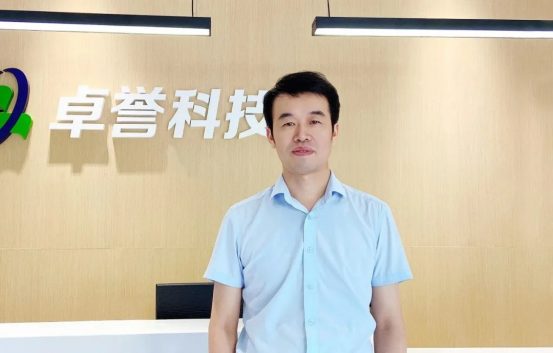
Hunan ZOY Technology Co., Ltd. was officially established in September 2015. But the “soft drink” was not easy to make. An air compressor only needs to compress air, while an oxygen generator must separate and purify oxygen. The technical difficulty is on a completely different level. The R&D team repeatedly tackled technical problems and abandoned several designs. Large amounts of capital were invested, yet the products still failed to meet the required standards, putting the company's cash flow under pressure at one point.
It was not until 2019 that ZOY's integrated oxygen generation system passed verification and entered the market. That year, sales were only RMB 1.65 million.
The real test came soon after. As orders increased, the company's heavy dependence on overseas suppliers for key components became a serious problem. Long lead times and limited supply meant that the more orders the company received, the more passive it became.
“Whether they supplied us and when they supplied us depended entirely on them,” Huang Gang recalled.
Huang Gang made a calculation: instead of being held back by supply cycles year after year, the company would be better off increasing R&D investment to achieve import substitution for core components. The team innovated the valve block, integrated complex piping and key components, and promoted domestic substitution of core components.
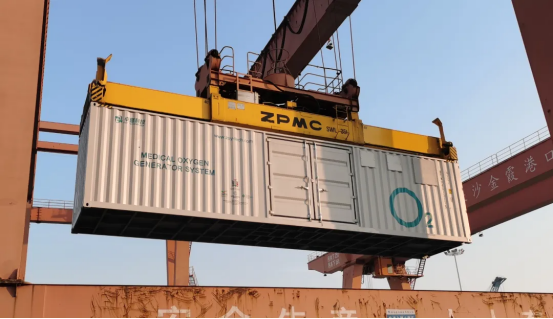
After the product iteration was completed, overseas suppliers began approaching ZOY instead. Payment terms were relaxed from advance payment to payment upon delivery. By then, however, ZOY had already completed the domestic substitution of all its core components. It took the company five years to move from dependence to greater control.
Today, ZOY's oxygen generation systems can continuously produce oxygen at concentrations above 93% and operate around the clock while significantly reducing energy consumption. Its high purity oxygen generation systems can achieve oxygen purity of up to 99.5%, serving a wider range of applications.
If technological breakthroughs are ZOY's “inner strength”, then a series of major national projects have become its strongest “calling card.”
The Sichuan Tibet Railway is one of ZOY's most significant projects. More than 80% of the railway is located at altitudes above 4,000 meters, where the oxygen content of the air is only around 60% of that at sea level. With bridges and tunnels accounting for 95.6% of the entire line, and hundreds of kilometers of deep tunnels, oxygen deficiency becomes an even greater challenge in enclosed working environments.
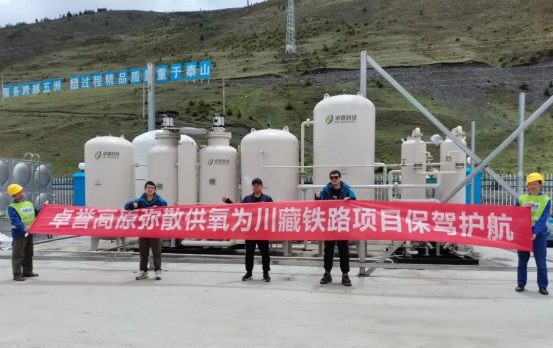
In 2021, ZOY entered the oxygen supply project for the Sichuan Tibet Railway. By the end of 2025, ZOY had delivered more than 100 sets of large scale professional oxygen supply equipment to 35 engineering bureaus along the Ya'an–Nyingchi section, including the largest 120 Nm³/h oxygen generation system on the entire line.
"On the full Sichuan Tibet Railway line, our system delivers top ranked oxygen concentration and maximum oxygen flow output."
ZOY completed 80% of the oxygen supply projects along the line.
Naval hospital ships presented a different level of challenge. ZOY's oxygen generation systems have been deployed on the naval hospital ships Silk Road Ark and Auspicious Ark, both of which operate as Class A tertiary hospitals. Marine environments impose extremely high requirements for corrosion resistance, explosion protection, seismic resistance and weather resistance.
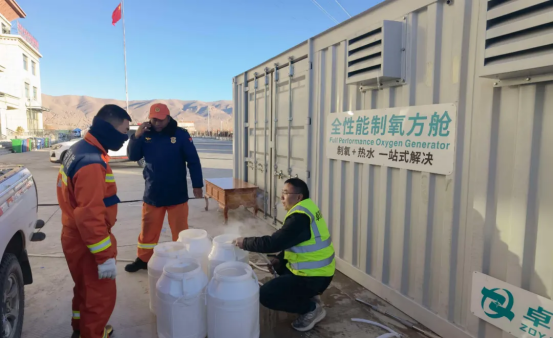
On January 7, 2025, a magnitude 6.8 earthquake struck Tingri County, Xigazê, Tibet. ZOY responded immediately, dispatching personnel from Changsha and its Tibet project base. A full performance container integrating oxygen generation, hot water supply and oxygen cylinder filling, worth more than RMB 1 million, was rapidly transported to Changsuo Township, one of the areas most severely affected by the disaster. The equipment was quickly positioned and commissioned, establishing an emergency oxygen generation station at an altitude of more than 4,000 meters and temperatures below 10°C.
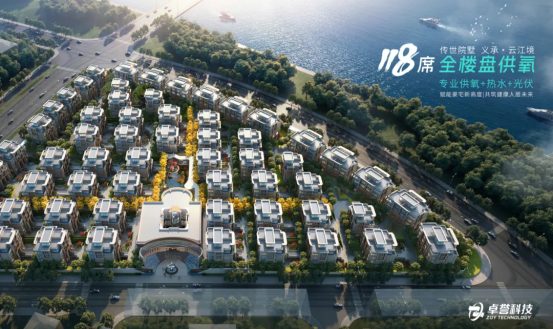
ZOY's list of “extreme scenarios” continues to grow. Its oxygen supply project in Hongyuan County, Aba Prefecture, Sichuan, helped the prefecture achieve a breakthrough in centralized oxygen supply. In Yiwu, Zhejiang, a 118 unit whole building oxygen supply project is supporting a new concept of healthy premium living.
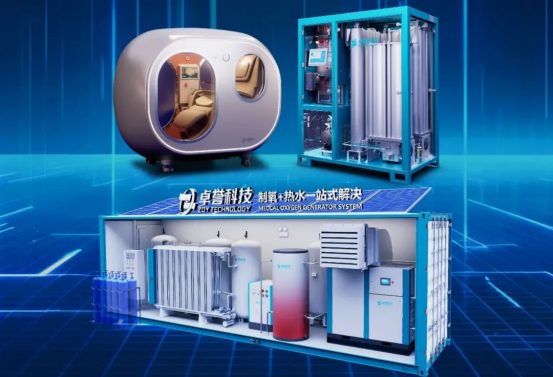
In the medical oxygen generation sector, ZOY has not followed a simple equipment selling model. Instead, it has developed a differentiated product system built around “oxygen + hot water + solar PV”.
The first layer is “oxygen + hot water.” ZOY's full performance oxygen and hot water integrated container combines a compressor system, heat recovery system, oxygen generation system and oxygen cylinder filling system. While generating oxygen efficiently, it recovers waste heat to provide hot water. One system therefore addresses two essential hospital needs: oxygen supply and hot water, making fuller use of available energy.
The second layer is “+ solar PV.” ZOY's oxygen generation systems can be equipped with a dual power supply combining solar PV and grid electricity. When sunlight is sufficient during the day, photovoltaic power takes priority. During cloudy weather or at night, the system automatically switches to grid power without interruption, keeping oxygen production running while reducing electricity costs.
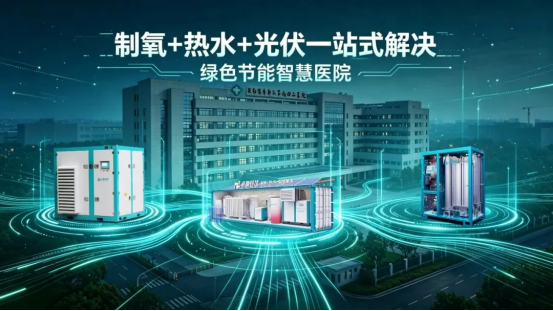
In July 2026, ZOY presented its integrated “oxygen + hot water + solar PV” one stop zero carbon energy saving solution at the 10th China Hospital Energy Conservation Conference in Shanghai. Its 10 Nm³/h outdoor weatherproof integrated oxygen generator operated steadily throughout the event. During a special presentation, the company proposed a three in one solution integrating core oxygen generation technology, waste heat recovery for hot water production, and photovoltaic clean energy. This has evolved from product innovation into a systematic solution addressing hospital energy consumption.
The commercial logic is clear: hospitals are typically high energy consuming facilities, with oxygen generation and hot water supply among their major energy demands. One system addresses three energy related areas and creates a closed loop energy saving model. Against the backdrop of tighter medical insurance controls and high quality hospital development, “reducing costs and increasing efficiency” is one of the most practical drivers behind hospital procurement.
In January 2026, ZOY's new production workshop in Changsha Economic and Technological Development Zone was completed and put into operation. Covering more than 8,000 square meters, the new facility features an organized production line and planned annual capacity of more than 1,000 units. This gives ZOY greater capacity to undertake large scale procurement orders. The days when the company hesitated to accept orders because it was concerned about delivery capacity are becoming a thing of the past.
Almost at the same time, ZOY entered into a strategic partnership with UIH MedInfo (United Imaging Medical Information Technology). President Zhao Yuxing stated clearly that the company would provide ZOY with deep support through medical channels and industrial investment. The two sides have maintained close interaction since then. In June, Zhao Yuxing led a core team to visit ZOY, and in July, ZOY's team visited UIH MedInfo for a study tour. This two way cooperation is opening new channels into the medical market.
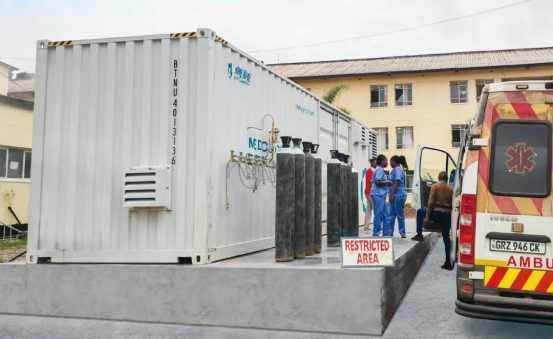
Overseas, the company is also accelerating its expansion. In July 2026, Hou Xingwang, Chairman of Xingwang Technology Group and President of the Hunan China Africa Economic and Trade Chamber of Commerce, led a delegation to visit ZOY. The company subsequently decided to use Tanzania as an entry point to introduce ZOY's oxygen equipment into African mining areas and remote regions. The first Tanzanian oxygen project was signed that same month. Previously, in October 2024, 15 integrated oxygen and hot water containers purchased by the World Bank had been shipped from Changsha to Zambia. From the Dubai Arab Health exhibition to brand stores in the United Kingdom, Germany and Bangkok, Thailand, ZOY's products have now entered more than 60 countries and regions worldwide.
The production base is being strengthened, and distribution channels are gradually expanding. But whether the market will fully embrace the company still depends on the broader industry. The medical oxygen generation sector is currently undergoing three structural changes.
But opportunity does not mean every company will benefit. ZOY has differentiated itself through the integrated “oxygen + hot water + solar PV” solution, but the path is not wide. Once leading companies decide to pursue integrated solutions, or use price competition to capture market share, ZOY will need to maintain its first mover advantage.
There are also uncertainties in the technology route. PSA oxygen generation is not unique to ZOY. Companies such as Peking University Pioneer continue to advance large scale oxygen generation equipment for industrial combustion support applications. If technologies such as membrane separation make further breakthroughs, existing barriers could potentially be bypassed.
In addition, payment cycles for public hospitals and national level projects are generally long. As orders increase, accounts receivable can accumulate more quickly. As a non listed company, ZOY has relatively limited financing channels, making its financial pressure worth continued attention. At the same time, expanding from medical oxygen into civilian health, high altitude engineering and smart aquaculture stretches the company's business boundaries considerably. Whether its management capabilities and talent pool can keep pace will also be an important challenge.
From entering the medical oxygen generation sector in 2015 after years in the air compressor business to reaching an expected annual output value of RMB 120 million in 2026, ZOY Technology has spent a decade completing its transition from “air compressors” to “oxygen generators.”
What makes the company distinctive is that it has not simply pursued incremental growth within its comfort zone. Instead, it has built its capabilities through extreme operating environments. The tunnels of the Sichuan Tibet Railway, the decks of naval hospital ships and the earthquake stricken areas of Tingri County — these “extreme scenarios” have become ZOY's strongest brand credentials and a barrier that competitors may find difficult to replicate.
For ZOY, 2026 is a critical year for moving “from 1 to N.” The new 8,000 square meter workshop is releasing additional capacity; strategic cooperation with UIH MedInfo is opening new channels; solar PV related products are continuing to gain market validation; overseas expansion is accelerating with Africa as a foothold; and the Class II priority medical device review and approval process is advancing.
Capacity, channels, products, policy and overseas markets — five factors are beginning to converge. For this “invisible champion,” which remains relatively unknown to the capital market, the key questions for the next decade will be how to continue expanding its market share amid competition from major players, and how to develop its three growth curves — medical oxygen, high altitude oxygen and civilian applications — at the same time.
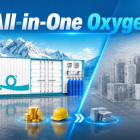
09-30-2026
Does an Integrated “All-in-One” Oxygen Machine Really Save on Installation and Engineering Costs?When hospitals compare two PSA oxygen systems, the equipment quotation is usually the easiest part to compare. The more interesting question often comes later: How much work is still left after the equipment arrives on site? A split-type PSA system is not necessarily difficult to install. Experienced oxygen equipment suppliers often provide installation, commissioning and…
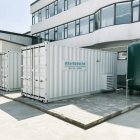
09-24-2026
New Oxygen for the “City of the Sage” | Two ZOY Full-Performance Oxygen Shelters Installed at Qufu Second People’s HospitalQufu is known as the hometown of Confucius and the “City of the Sage in the East.” For more than two thousand years, this city has been shaped by Confucian culture and the idea of “benevolence toward others.”That spirit is still very much part of everyday life here. And today, it is also reflected in…
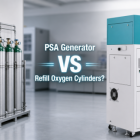
09-24-2026
Is It Cheaper for a 50-Bed Clinic in Africa to Refill Oxygen Cylinders or Install a Small On-Site PSA Generator?Why use a 50-bed clinic as the example? Because it sits in an interesting middle ground. A very small clinic may consume too little oxygen to justify its own production system, while a large hospital has more obvious reasons to build dedicated oxygen infrastructure. Around 50 beds, however, the question becomes much more practical: Is…
Submit Request